Shandong Xiangying New Materials Technology Co., Ltd.


Leave Your Message

2026 Top WPC Decking Suppliers for Global Buyers

Global buyers are entering a more demanding WPC Decking market. Suppliers now compete on durability, appearance, documentation, and after-sales support. Product photographs are no longer enough.

Grand View Research valued the global wood-plastic composite market at approximately USD 7.2 billion in 2023. Its report projects a compound annual growth rate of about 7.7% from 2024 to 2030. These figures cover wider applications, not decking alone. Still, they indicate strong material demand. MarketsandMarkets also identifies construction as a major growth area for wood-plastic composites. Regional results remain uneven, however. Climate, installation standards, freight costs, and local building practices can change the final choice.

Material science matters.

Dr. Qinglin Wu, a widely cited wood-plastic composite researcher, has stated, “Wood-plastic composites combine the advantages of wood and plastics.” That balance sounds simple. It is not. A supplier’s formula may include recycled polyethylene, polypropylene, wood flour, pigments, and stabilizers. Their ratios affect color retention, slip resistance, expansion, and surface temperature. Buyers should request test reports, batch records, warranty terms, and installation guidance. Look closely at moisture exposure and ultraviolet testing. A low quotation may hide thinner boards, weaker clips, or limited technical support.

This guide reviews leading 2026 WPC Decking suppliers for international buyers. It considers manufacturing capacity, export experience, certifications, product consistency, and customization. Some rankings remain difficult. Public data is incomplete, and supplier claims are not always comparable. That limitation deserves attention. Reliable sourcing requires more than a polished catalogue. It requires evidence, samples, and careful questions before the container leaves the factory.
2026 Top WPC Decking Suppliers for Global Buyers

WPC Decking: Materials, Features, and Global Market Overview

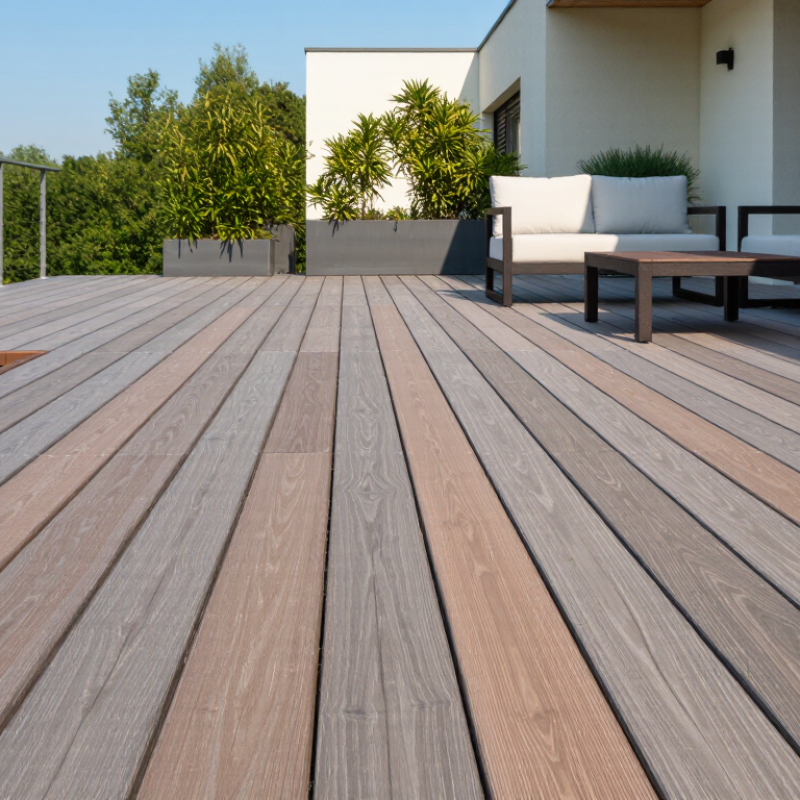
WPC decking combines wood fibers or flour with thermoplastic polymers, usually polyethylene or polypropylene.

Mineral fillers, pigments, and stabilizers may improve stiffness, color retention, and weather resistance. The exact recipe matters. Two boards can look identical but perform differently under heat, moisture, and heavy traffic.

Its main advantages include low splintering, resistance to fungal decay, and simpler cleaning than untreated timber.

However, WPC is not maintenance-free. Dark boards can become hot in direct sunlight, while poor drainage may encourage surface staining.

Thermal expansion also requires careful spacing and suitable fastening systems. It feels solid. Yet surface texture, slip resistance, and fading should be tested rather than assumed.

Global demand is growing around residential terraces, hotels, waterfront projects, and public walkways.

Buyers in humid regions usually prioritize water resistance and drainage design. In colder markets, freeze-thaw performance and installation tolerances deserve closer attention.

Supply decisions should include material composition, load data, fire classification, recycled content, and independent test reports.

Some suppliers promote recycled content without explaining its source or consistency. That deserves scrutiny.

A reliable purchasing process compares samples after heat, moisture, and abrasion exposure, not only catalog photographs.

Local building requirements, delivery conditions, and replacement availability can influence the real project cost.

How to Evaluate WPC Decking Suppliers for International Purchasing

For global buyers, evaluating WPC decking suppliers requires more than comparing catalog prices. Grand View Research estimated the global wood-plastic composites market at about USD 7.1 billion in 2023, with continued growth expected through 2030. This expansion attracts capable factories and inexperienced traders. Verify the supplier’s legal company identity, production address, export history, and quality system before requesting a quotation.

Ask for recent test reports, not polished brochures. Check slip resistance, water absorption, flexural strength, color stability, and thermal expansion. ASTM, EN, and ISO results are useful only when the tested formulation matches the shipped product. Request samples from different production batches. Place one outdoors for several weeks. Look for warping, surface chalking, screw movement, and hollow sounds. Small details matter.

The Forest Stewardship Council reported that certified forest products support traceable sourcing, but certification claims still require verification. Ask for chain-of-custody documents when wood content is advertised as responsible. Also review packaging dimensions, container loading plans, moisture protection, and replacement policies. International freight can make a cheap board expensive. A 2024 industry outlook from Grand View Research projected strong WPC growth, yet market forecasts cannot replace factory audits. I would inspect an actual production line whenever possible. Remote checks help, but they miss uncomfortable truths. Supplier evaluation is never perfectly objective; even experienced buyers can overvalue low prices.

2026 Top WPC Decking Suppliers for Global Buyers - How to Evaluate WPC Decking Suppliers for International Purchasing

Global WPC Decking Supplier Evaluation Matrix

Use this scorecard to compare anonymous suppliers consistently. All technical claims should be verified through current certificates, test reports, samples, contracts, and pre-shipment inspections.

No. Evaluation Dimension Purchasing Data to Collect Recommended Reference or Target Verification Method Suggested Weight
1 Product Compliance Applicable product standards, declared use, dimensional tolerances, installation limitations For European projects, request evidence aligned with EN 15534 where applicable; for North American projects, review ASTM D7031 and ASTM D7032 documentation Check the full test report, laboratory scope, test method, sample identification, and report date 15%
2 Material Composition Wood-fibre source, polymer type, additives, recycled content, surface cap or co-extrusion structure A clearly declared formulation with consistent batch specifications; no undisclosed substitution of polymer, filler, or stabilizer Review technical data sheets, safety documentation, batch records, and independent composition testing when required 10%
3 Weathering and Moisture Performance Water absorption, dimensional change, freeze-thaw behavior, UV exposure, color-change data Test conditions must match the intended climate; outdoor durability should be supported by controlled exposure data rather than a generic “weatherproof” claim Request accelerated weathering results, water-absorption results, and a physical sample for outdoor comparison 15%
4 Structural and Slip Performance Span tables, load capacity, flexural properties, fastener compatibility, slip-resistance results The supplier should provide project-specific installation spacing and load guidance supported by test data Compare the span table with the project design; verify slip testing under wet conditions where safety requirements apply 15%
5 Fire and Building-Code Evidence Reaction-to-fire classification, flame-spread data, smoke data, and application restrictions Use the fire classification and test method required by the destination market and building authority Confirm that the report covers the exact profile, thickness, surface treatment, and installation configuration 10%
6 Quality Management Quality system, inspection plan, calibration records, non-conformance process, traceability A current ISO 9001 certificate can support process credibility, but it does not replace product-specific testing Verify certificate validity and scope through the issuing certification body; audit production and inspection records 10%
7 Environmental and Responsible Sourcing Wood-fibre origin, recycled-content claim, emissions data, packaging, end-of-life information Environmental claims should identify the calculation boundary and verification basis; FSC or PEFC evidence may be relevant when certified wood fibre is specified Request chain-of-custody evidence, recycled-content verification, EPD or LCA documentation where required by the project 8%
8 Export and Logistics Capability Incoterms 2020 quotation, export documents, packaging dimensions, loading plan, lead time, port options Quotation should state the named place, shipment window, packaging quantity, responsible party, and document set Compare a pro forma invoice, packing list, commercial invoice, certificate-of-origin process, and shipment references 8%
9 Commercial Terms MOQ, price validity, payment terms, tooling charges, sample policy, spare components, warranty scope All commercial conditions should be written into the purchase contract; warranty exclusions and installation responsibilities must be explicit Use a landed-cost model including product, packaging, freight, insurance, duties, inspection, and replacement risk 5%
10 After-Sales and Project Support Installation manuals, CAD files, color matching, claim response time, replacement policy, technical contact Documentation should be available in the buyer’s working language and include maintenance, storage, cutting, fastening, and cleaning instructions Request a complete document pack and test the supplier’s response using a written technical question before ordering 4%
Total Evaluation Weight 100%
Recommended International Purchasing Workflow
1 Pre-qualification: Collect legal entity details, product data sheets, certificates, test reports, production capacity, and export references.
2 Sample approval: Compare color, texture, dimensions, machining behavior, fastener compatibility, and surface condition using retained samples.
3 Technical validation: Match test evidence and installation guidance with the destination market, climate, building code, and project loading requirements.
4 Commercial comparison: Compare total landed cost, not only the quoted factory or FOB price.
5 Order control: Define approved specifications, inspection standards, tolerances, packaging, labeling, documents, and remedies in the contract.
6 Pre-shipment inspection: Verify quantity, dimensions, appearance, packaging, labels, and selected laboratory or contractual tests before shipment.

Note: Standards, certification requirements, import regulations, and building-code obligations vary by destination market. The buyer should confirm the current requirements with the relevant authority or qualified local professional before purchase.

2026 Top WPC Decking Suppliers and Their Product Strengths

2026 Top WPC Decking Suppliers and Their Product Strengths

Global WPC decking demand continues to expand, but supplier quality varies sharply. Grand View Research estimated the global WPC market at approximately USD 7 billion in 2023. Its forecast also indicates steady growth through 2030. This creates more sourcing options for global buyers. It also increases evaluation risks. Strong suppliers usually provide stable extrusion, documented recycled content, and consistent surface embossing. Their boards should resist moisture, insects, and daily abrasion without excessive fading. Better manufacturers also offer capped and uncapped profiles for different project budgets and climates.

Product strength depends on more than attractive samples. Suppliers serving coastal regions should provide test data for water absorption, slip resistance, ultraviolet exposure, and thermal movement. EN 15534 and ASTM D7032 offer useful reference points for composite performance. Independent laboratory reports are more reliable than sales claims. The International Code Council also recognizes relevant composite-decking evaluation requirements for structural applications. Ask for batch records, installation tolerances, fastener compatibility, and warranty conditions. Small details matter.

I would compare at least three factories before ordering. Some suppliers publish excellent laboratory results but provide weak installation guidance. Others offer low prices, yet their color consistency changes between containers. This is where buyers must remain skeptical. Request production samples from different batches. Check the underside, edge finish, and screw response. A supplier with strong engineering support may deliver better long-term value than the cheapest exporter. Mistakes still happen, especially when local climate data is ignored.

2026 Top WPC Decking Suppliers for Global Buyers

Product Strength Benchmark for International Purchasing

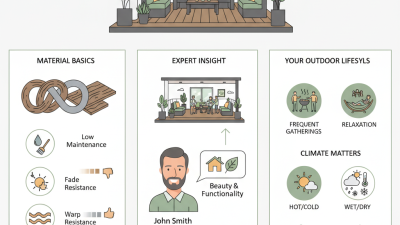
The benchmark uses common international WPC decking specifications rather than company or brand data. The values represent typical market reference points: approximately 60% wood fiber content, 40% recycled polymer content, 20 years of expected service life, 17 years of warranty coverage, and an R11-equivalent slip-resistance reference. Actual specifications vary by formulation, testing method, climate, and supplier.

Global Standards, Certifications, and Quality Control Requirements

Global buyers of WPC decking need more than attractive samples and competitive prices. Reliable suppliers should show compliance with relevant regional standards, including EN 15534 in Europe and ASTM performance methods in North America. Requirements may differ by climate, building use, and installation system. Ask for current test reports from accredited laboratories, not scanned certificates with unclear dates.

Quality control begins with incoming material checks. Manufacturers should record wood fiber moisture, polymer type, additives, and recycled content. During production, inspectors can measure board thickness, color variation, surface texture, and profile strength. Finished samples should undergo water absorption, slip resistance, UV exposure, freeze-thaw, and load testing. Small details matter. A warped board can disrupt an entire installation.

ISO 9001 can support process consistency, but it does not prove every product meets local decking requirements. Confirm the certificate’s scope, issuing body, and expiration date. Traceable batch numbers should connect factory records with shipment documents. Fire performance also needs market-specific testing, because classifications are not automatically transferable between countries. In practice, buyers should request installation manuals, maintenance guidance, safety data, and independent inspection options. A certificate alone is not enough. Some suppliers still rely too heavily on laboratory results from one production run. That weakness deserves honest review before a long-term contract.

Shipping, Pricing, and Contract Considerations for Overseas Buyers

For overseas buyers, WPC decking procurement begins with a clear shipping plan. Request quotes based on exact board dimensions, surface texture, packaging, and container loading capacity. A low factory price may become expensive after inland transport, port fees, duties, and destination delivery. Compare FOB, CIF, and DDP offers carefully. Each term transfers costs and risks differently.

Ask for production lead time, loading photos, moisture protection, and export documents. WPC boards can warp or scratch when packaging is weak. A buyer should confirm pallet size before booking freight. This small detail affects container efficiency. It also reduces unexpected handling charges. Insurance terms deserve attention too, especially for long ocean routes and transshipment ports.

Pricing should reflect formulation, reinforcement, accessories, color consistency, and warranty support. Request a physical sample and a written tolerance standard before placing a bulk order. The contract should state product specifications, inspection timing, payment milestones, delivery dates, and remedies for shortages. Include rules for replacement boards and acceptable color variation. Do not rely on friendly messages alone. They are easy to misunderstand. Even careful buyers can overlook local import requirements or seasonal port congestion. A staged order may cost more initially, but it can reveal installation or packaging problems before a full container is committed. My own reflection is simple: the cheapest quote is rarely the clearest commercial decision.