Shandong Xiangying New Materials Technology Co., Ltd.


Leave Your Message

10 Best WPC Board Suppliers for Global Buyers

Choosing among the 10 Best WPC Board Suppliers for Global Buyers takes more than comparing prices. A Wpc Board may look consistent in a showroom, yet reveal differences after months of sun, rain, or repeated foot traffic. Buyers need clear product data, not polished promises.

Materials researcher Ali Ashori wrote, “Wood-plastic composites (WPCs) are a group of materials that have been developed in recent years.” His 2008 review highlights a growing material category, but every board still depends on its formulation and manufacture. That matters when checking wood-fiber content, polymer type, surface finish, dimensional stability, and intended use. Ask suppliers for technical data sheets, recent test reports, sample pieces, and care instructions. Look closely at the edges and color consistency; small flaws there can signal uneven production. Confirm order capacity, lead times, packaging, export experience, and how the supplier handles quality concerns. Details vary.

This guide compares suppliers using practical questions global buyers can verify, rather than treating a ranking as a guarantee. Certifications can help, but check their scope and validity. A low quote may exclude freight, protective packaging, or replacement terms. Even a well-documented supplier can miss a delivery window. No shortlist is perfect. Use the profiles as a starting point, then confirm current specifications, samples, and commercial terms directly before placing an order.
10 Best WPC Board Suppliers for Global Buyers

Understanding WPC Boards and Their Global Applications

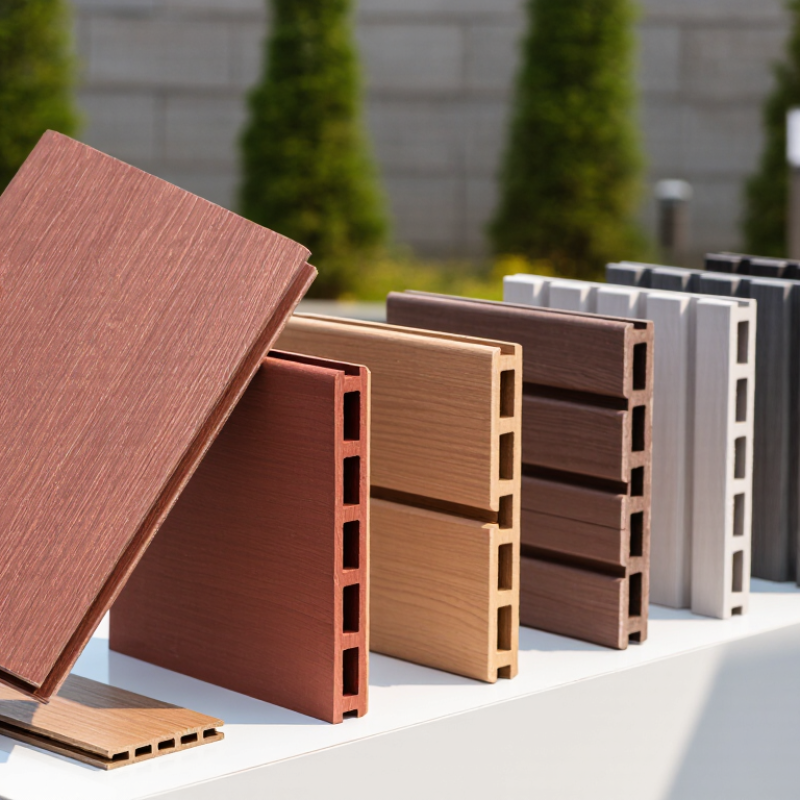
WPC boards blend wood fibers or flour with thermoplastics and selected additives. Their precise makeup varies, so two boards with similar appearances may perform differently. They are used for decking, fences, façade details, benches, and other outdoor features. Some products also suit indoor wall or furniture applications. The wood content gives a familiar grain, while the polymer helps resist moisture. Neither feature makes every board suitable for every climate.

Think about the installation site. A sunlit deck in a dry region faces different stresses from a shaded walkway exposed to frequent rain. Heat can cause expansion, so boards need suitable spacing and a stable substructure. Check the product’s installation guide, surface temperature limits, and available test data before specifying it. Samples help, too. Feel the surface after rain, inspect the finish, and compare the color across pieces. “Low maintenance” is relative. Dirt still gathers in grooves, and some finishes fade sooner than expected.

For global projects, buyers should match board dimensions and performance data to local conditions, shipping constraints, and installer skills. Ask suppliers for consistent technical sheets and batch details, not just attractive photographs. A board may pass one test yet still feel too hot or slippery for its intended use. That part is easy to overlook. Consider drainage, ventilation, and replacement access while planning the layout.

Key Criteria for Evaluating WPC Board Suppliers

When comparing WPC board suppliers, look beyond catalog photos and headline prices. Request samples from the production range you would actually order. Check whether the surface color, edge finish, and board thickness match the specification. A caliper and a close look at cut edges can reveal inconsistencies. Small details matter.

Ask for recent test reports that identify the tested product and methods used. Confirm the supplier can explain water absorption, bending strength, and maintenance limits in clear terms. Check production capacity, minimum order quantities, lead times, and packaging for long-distance shipping. Ask how damaged or mismatched boards are documented and handled. A polished quotation is useful, but it cannot replace clear answers. I have seen checklists miss the practical question: can the supplier keep the next batch consistent?

Tips: Send the same written specification to every candidate. Include board dimensions, color tolerance, intended use, and required documents. Compare replies side by side, then inspect samples under natural light. Keep a record of agreed details before placing an order. A small trial shipment may expose packing issues, though it adds time and cost. Ask for references where available, and verify claims independently.

Profiles of Ten WPC Board Suppliers for Global Buyers

A global buyer can compare ten supplier profiles by product focus, manufacturing evidence, and export support. The first profile is a decking specialist, offering textured boards and matching clips for patios.
The second focuses on fencing, with hollow profiles that reduce weight during handling.
The third supplies wall cladding in varied finishes; request samples to judge color consistency.
The fourth serves interior projects with smooth boards for decorative panels.

Samples tell more.

The fifth profile emphasizes custom dimensions, useful for projects with unusual layouts.
The sixth offers broad stock availability, which may help buyers manage repeat orders.
The seventh supports private-label packaging and clear pallet markings.
The eighth concentrates on recycled-content formulations, but buyers should verify material statements and test results.
The ninth provides technical guidance on cutting, spacing, and installation.
The tenth specializes in export coordination, including packing lists and shipment updates.

These are supplier types, not endorsements of specific companies. Ask each candidate for current specifications, warranty terms, and independent test documentation.

Compare boards under similar conditions: check surface finish, edge quality, and dimensions with a simple measuring tool. A confident sales reply is not proof of consistent production.

Some details are easy to overlook, especially lead-time changes between sample approval and bulk manufacture. Request a dated quotation and a sample from the intended production line.

Comparing Supplier Capabilities, Markets, and Product Ranges

WPC board suppliers differ in more than factory size. Buyers should compare extrusion capacity, thickness tolerances, surface consistency, and quality checks across production batches. A supplier handling large orders may still struggle with custom colors or short production runs. Ask for recent samples, not only catalog photographs. Check whether edges stay clean after cutting and whether boards warp under expected heat and moisture.

Market experience also shapes service. Some suppliers focus on outdoor decking and fencing, while others offer cladding, wall panels, or interior boards. Export experience can help with packaging, container planning, and clear technical documents. Still, claims about weather resistance or recycled content need supporting test data. Details matter. A board suited to a dry inland site may not perform the same near a humid coast.

Product range is useful only when specifications are clear. Compare dimensions, surface finishes, installation accessories, and available colors against the project schedule. Ask how defects are handled and whether replacement stock can be supplied later. Samples can reveal texture and color variation, but they cannot prove long-term performance. Not always. Even careful comparisons leave uncertainty, especially when suppliers use different testing methods. Record the limits as well as the strengths before choosing a partner.

WPC Board Suppliers: Global Buyer Comparison Framework

A practical checklist for comparing product ranges, market readiness, compliance, manufacturing, and logistics.

Bars count the checklist items listed for each evaluation area; they are not supplier ratings, market statistics, or a ranking. Check product applications, export documentation and target markets, relevant test reports and declarations, manufacturing options, and shipping terms when assessing suppliers.

How to Verify and Select a WPC Board Supplier

A dependable WPC board supplier should be able to explain what each specification means in use. Ask about wood-fiber content, resin type, board density, and intended applications. A product sheet is useful, but it cannot show how a board feels or cuts. Request samples from the production range, not only a polished display piece. Check the edges, surface consistency, and fastening behavior with tools you actually use.

Look for recent test reports that match the exact product and thickness you plan to buy. Moisture resistance, dimensional stability, and performance under sunlight may matter differently for decking and indoor panels. Confirm who conducted the tests and whether the report identifies the tested material clearly. Small details matter. If documents are vague, ask direct questions and keep the replies. A supplier’s willingness to clarify is useful evidence, though it is not proof of quality by itself.

Before placing a large order, discuss tolerances, packaging, lead times, and how defects are handled. Ask for references from buyers with similar projects, then verify those references independently where practical. Compare quotations line by line; a low price may exclude protective wrapping or inspection. If possible, inspect a production batch or arrange a third-party check before shipment. This adds cost and time. It may still be worth it, especially when color variation or warped boards would disrupt installation. A perfect sample does not guarantee a perfect container.

10 Best WPC Board Suppliers for Global Buyers - How to Verify and Select a WPC Board Supplier

No. Evaluation Area Evidence to Request How to Verify Positive Selection Signal
1 Business identity and legal status Current business registration, registered address, tax details, and export entity information. Check the documents against the relevant government business registry and confirm that the contracting and payment entities match. Company details are consistent across registration documents, quotation, contract, and bank beneficiary information.
2 Manufacturing capability Factory address, production-line overview, equipment list, and recent production photographs or video. Arrange a live video tour or independent factory audit. Confirm whether production is performed in-house or subcontracted. The supplier clearly explains its manufacturing role, production process, and quality-control responsibilities.
3 Product specifications Product data sheet covering composition, dimensions, tolerances, density, surface finish, intended use, and installation requirements. Compare the data sheet with the quotation, samples, drawings, and purchase contract. Ask the supplier to identify any product-specific limitations. Specifications are complete, consistent, and tied to the exact WPC board model being purchased.
4 Performance testing Recent test reports for relevant properties, such as water absorption, flexural performance, dimensional stability, and slip resistance where applicable. Check the test method, sample description, test date, and laboratory details. Where appropriate, confirm the report with the issuing laboratory. Reports cover the intended application and match the product composition, profile, and model offered.
5 Standards and compliance claims Applicable declarations, certificates, and test reports for the destination market and intended use. Verify each document with its issuer and check that the cited standard applies to the product type and claim. For example, ASTM D7032 addresses performance requirements for wood-plastic composite decking and guardrail systems. Claims are specific and supported by current documents rather than broad, unverified statements of compliance.
6 Quality management and inspection Quality procedures, incoming-material checks, in-process inspection records, finished-product inspection criteria, and any relevant quality-system certificate. Confirm certificate validity and scope with the issuing body. Ask for a sample inspection checklist and documented handling of nonconforming products. Inspection steps and acceptance criteria are documented and can be connected to the ordered product batch.
7 Material consistency and traceability Batch identification method, material declarations, production records, and procedures for controlling changes to formulation or suppliers. Ask how a production batch can be traced from raw materials through finished goods, and whether changes require buyer approval. The supplier can trace batches and gives advance notice of changes that may affect product performance or appearance.
8 Capacity and delivery planning Written production lead time, available capacity, packaging details, loading plan, and proposed delivery schedule. Compare the schedule with the requested order volume and request updates at agreed production milestones. Lead times are stated in writing, realistic for the order size, and supported by a clear production and shipping plan.
9 Export and shipping documentation Sample commercial invoice, packing list, bill of lading or other transport document, certificate of origin where applicable, and packaging information. Have a customs broker or freight forwarder review the proposed documents and confirm destination-country import requirements. The supplier can prepare documents consistent with the contract, shipment, product description, and agreed delivery terms.
10 Warranty, after-sales support, and contract terms Written warranty terms, exclusions, claims procedure, replacement policy, payment schedule, and agreed inspection or dispute process. Review the terms before paying a deposit. Confirm how defects are documented, who bears related costs, and which contract terms govern a dispute. Responsibilities, remedy options, payment milestones, and claim deadlines are clearly stated in the signed agreement.

Use these criteria to compare and verify suppliers rather than relying on an unsupported ranking. Requirements vary by product design, application, and destination market; request evidence for the exact product and intended use.