Shandong Xiangying New Materials Technology Co., Ltd.


Leave Your Message

China Top 10 Wall Panel Manufacturers and Suppliers?

Choosing among China’s top 10 Wall Panel manufacturers and suppliers requires more than comparing catalog prices. A factory may show polished showrooms, yet daily production tells a different story. This guide examines manufacturers through material quality, production experience, export capability, and communication. We consider PVC, WPC, bamboo-charcoal, acoustic, and decorative panels. Each type serves different spaces. A hotel lobby needs visual consistency. A bathroom needs moisture resistance. An office may need sound control. Small details matter.

Our review focuses on evidence buyers can check. We look for product test reports, stable raw-material sourcing, documented quality-control steps, and clear warranty terms. Factory visits, sample comparisons, and reference projects can reveal problems that websites hide. Ask about panel thickness, surface coating, fire performance, edge accuracy, and packing protection. Request a recent sample. Check the batch. These practical steps help importers, contractors, designers, and distributors reduce avoidable risks.

The phrase “top 10” should not imply a universal ranking. A reliable supplier for one project may be unsuitable for another. Minimum order quantities, customization, tooling fees, container loading, and delivery schedules can change the decision. We also recognize a limitation: public information is incomplete, and supplier conditions can change. That is why this introduction favors verification over impressive claims. Use the shortlist as a starting point, then test samples and confirm documents before signing a purchase agreement. Good sourcing is less glamorous. It is more dependable.
China Top 10 Wall Panel Manufacturers and Suppliers?

China Wall Panel Market Scale: 2024 NBS and Customs Statistics

China Top 10 Wall Panel Manufacturers and Suppliers: China Wall Panel Market Scale, 2024 NBS and Customs Statistics

China’s wall panel market lacks one official statistical category. Panels may appear under aluminum structures, plastic building fittings, wood products, or ceramic materials. This classification gap matters. Using 2024 National Bureau of Statistics data, China’s real estate development investment fell 10.6% year on year, while new housing starts declined about 23%. These figures indicate weaker conventional construction demand, especially for large residential projects.

Yet the market is not simply shrinking. Renovation, commercial interiors, hospitals, schools, and prefabricated buildings continue creating demand for lightweight panels. The General Administration of Customs reported China’s total goods trade at approximately RMB43.85 trillion in 2024, with exports rising 7.1%. Customs records can help evaluate panel-related export flows, but analysts must combine several HS codes rather than rely on one category. That method is more realistic, though still imperfect.

For buyers comparing China’s top wall panel manufacturers and suppliers, export value alone is insufficient. Check panel thickness, fire performance, moisture resistance, test reports, packing quality, and delivery records. A factory may show strong overseas shipments but limited experience with complex interior specifications. Request production samples. Inspect the core, surface joints, and edge treatment closely. NBS and Customs data describe market direction, not factory reliability. This distinction is often overlooked.
Ranking the Top 10: Output, Revenue, Capacity, and Export Data

China Top 10 Wall Panel Manufacturers and Suppliers

Ranking the top ten wall panel manufacturers requires more than comparing factory size. Output, annual revenue, production capacity, and export performance provide a clearer picture. A strong supplier may produce 8 million square meters yearly, operate several automated lines, and ship regularly to more than 30 markets. However, revenue figures can include unrelated products. That weakens direct comparison.

A reliable ranking should combine audited financial records, verified factory capacity, customs data, and recent shipment history. Production capacity shows potential, not actual sales. Export volume also needs context. A company shipping 500 containers may serve large projects, while another exports smaller, higher-value orders. Site visits can reveal storage conditions, curing areas, packaging methods, and quality-control routines. These details often matter more than polished brochures.

Tips: Compare three years of data. Ask for monthly output, not only annual capacity. Check whether export numbers include private-label orders. Request test reports for fire resistance, moisture control, and dimensional stability. Also review delivery records and claims handling. Data is not always perfectly comparable, and that deserves attention. A supplier may report installed capacity rather than active capacity. Some rankings still rely on incomplete disclosures, so buyers should verify key figures before signing contracts.

Top 10 Chinese Wall Panel Manufacturers and Suppliers by Product

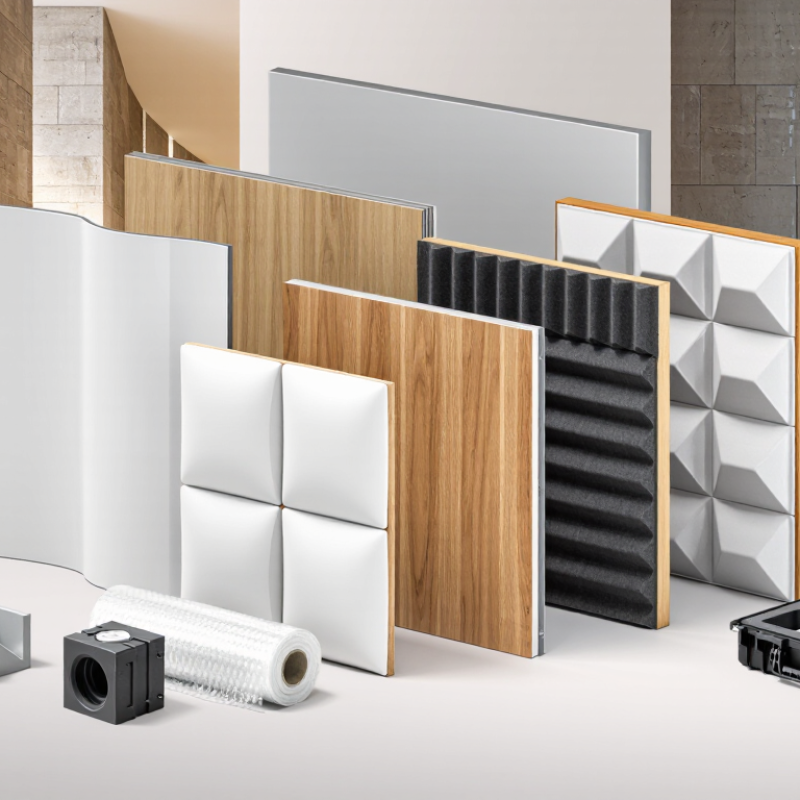
China’s leading wall panel manufacturers and suppliers are easier to compare by product than by company size. Decorative PVC wall panels suit bathrooms, kitchens, and rental renovations. They are light, water-resistant, and often available in marble, wood, or plain colors. Fire-rated mineral fiber panels serve offices, hotels, and public interiors. Buyers should request test reports, because visual similarity does not prove equal performance.

Acoustic wall panel producers focus on PET felt, fabric-wrapped boards, and slatted systems. These products reduce echo in studios, meeting rooms, restaurants, and classrooms. Wood veneer and bamboo panel suppliers offer warmer surfaces for hospitality and residential projects. Natural materials need careful moisture control. Poor storage can cause warping before installation. That detail is often missed.

Exterior wall panel manufacturers commonly supply aluminum composite, fiber cement, and insulated sandwich panels. These products support façade renovation, thermal control, and faster construction. Stone-plastic panels provide another practical choice for durable indoor finishes. Top suppliers usually provide samples, installation drawings, packaging photos, and batch information. Ask about thickness tolerance, adhesive compatibility, and replacement availability. A low quotation can hide weaker cores or inconsistent color. No ranking is perfect. Project climate, building codes, and installer skill can change the best choice. Careful sampling remains more reliable than a polished catalog.

China Wall Panel Manufacturers and Suppliers by Product Type

This chart compares ten commonly supplied wall panel categories in China by their representative thickness ranges. Actual specifications may vary according to application, material composition, surface finish, and customization requirements.

Technical Comparison: Fire Rating, Density, Warranty, and Lead Time

When comparing China’s wall panel manufacturers and suppliers, technical documents matter more than polished catalogs. Request a current fire-test report for the exact panel assembly, not only the core material. Ratings under EN 13501-1 or ASTM E84 can change with facing, adhesive, joints, and installation method. A panel labeled “fire resistant” is not automatically suitable for every project.

Density deserves equal attention. A 900 kg/m³ mineral-based panel may resist impact well, but it can increase structural load and installation effort. Lower-density boards are easier to cut, yet they may dent during handling. Check density tolerance, thickness variation, moisture behavior, and acoustic data from the same production batch. Small differences matter. Site conditions often expose them.

Warranty terms should state coverage length, replacement procedures, and exclusions for humidity, movement, or improper fixing. A ten-year warranty means little without written installation requirements. Lead time should include sample approval, production, inspection, packing, and shipping. Standard colors may leave the factory in two to four weeks; custom finishes can take longer. Confirm the production schedule in writing, and allow extra time for port delays. This is where many estimates become optimistic. A factory inspection, random density checks, and carton-level photos can improve reliability before dispatch.

Compliance Check: GB, ISO, CE, ASTM, and Third-Party Test Data

For China’s top wall panel manufacturers and suppliers, compliance evidence should be checked before price or appearance.

GB standards may cover fire performance, formaldehyde release, moisture resistance, and dimensional stability. For wood-based panels, GB 18580 is relevant to formaldehyde emissions, while GB 8624 classifies reaction to fire. Requirements depend on the product and installation location. A factory certificate alone proves little.

ISO certification supports process control, not automatic product compliance. The ISO Survey 2023 reported about 1.26 million ISO 9001 certificates worldwide, showing its broad use as a management benchmark. However, ISO 9001 does not replace material testing. CE marking applies only when the product falls under applicable European requirements, often through harmonised standards or a technical assessment. ASTM references, such as surface-burning or structural test methods, are also test frameworks, not certificates. This distinction is often missed.

Tips: Request current reports from an accredited, independent laboratory. Check the exact panel model, production batch, test date, standard edition, and laboratory accreditation. Review fire, formaldehyde, VOC, water absorption, and impact results. Ask whether the tested assembly matches your wall system. A supplier may present excellent data from an older sample. That is a weakness. Verify factory audit records, calibration logs, and corrective-action reports. The evidence should be traceable, not merely attractive. Recognised third-party reports provide stronger assurance, but even they need technical review against the project’s local code and actual use.