Shandong Xiangying New Materials Technology Co., Ltd.
Choosing the right 3d Uv Marble Sheet for global projects requires more than comparing colors and surface gloss. Architects, contractors, and importers must assess performance, documentation, and installation conditions together. A sheet that looks convincing under showroom lighting may react differently beside a sunny hotel window. It may also perform poorly in humid bathrooms or busy retail corridors.
Material experience matters. Review the core composition, thickness tolerance, surface coating, scratch resistance, and moisture behavior. Request technical data sheets, batch samples, and recent inspection records from the supplier. Check whether the supplier can provide consistent color across large orders. Small differences become obvious on a long lobby wall. Ask for fire-performance, emissions, and chemical-resistance documents relevant to the destination market. Requirements vary between countries and project types. Local professionals should verify every certification before approval.
Installation details deserve equal attention. Confirm whether the 3d Uv Marble Sheet suits the substrate, adhesive, cutting tools, and available labor skills. A lightweight panel can reduce handling effort, but poor wall preparation may cause visible joints or future lifting. That risk is easy to underestimate. Compare packaging strength, pallet protection, lead times, replacement policies, and after-sales support. Global delivery adds more uncertainty, including temperature changes and warehouse storage. Test a complete mock-up before mass production. It reveals color shifts, edge alignment, lighting reflections, and cleaning issues early. No product is perfect. The best choice balances appearance, verified performance, regional compliance, and realistic project conditions.
3D UV marble sheets are lightweight decorative panels designed to imitate natural stone. They usually combine a polymer or composite core, a printed marble pattern, and a UV-cured protective surface. The “3D” effect comes from embossed veins or a textured finish. The label sounds precise, but it is not a universal technical standard. Specifications can vary widely between suppliers.
MarketsandMarkets’ 2023 Decorative Laminates report projects this market to grow from USD 9.4 billion in 2023 to USD 12.6 billion by 2028. That growth reflects demand for faster, lighter interior finishes. These sheets are used on feature walls, ceilings, reception counters, wardrobe doors, bathroom walls, retail displays, and hospitality interiors. They can reduce installation time where cutting and dry fixing are suitable.
On a real project, visual appeal is only one selection factor. Check sheet thickness, core composition, UV resistance, fire classification, moisture performance, and formaldehyde or VOC test results. For humid areas, inspect edge sealing and substrate compatibility. In hotels or healthcare spaces, local fire and hygiene requirements may control the choice. Texture also matters. Deep embossing looks convincing, but it can collect dust and require careful cleaning. I have seen attractive samples fail when lighting exposed repeated patterns. Request full-size samples, not small swatches. Slight imperfections may reveal whether the marble effect feels natural or overly artificial.
Choosing 3D UV marble sheets for global projects requires more than matching colors. Material structure affects installation, durability, and compliance.
Compare the core substrate carefully. PVC sheets are lightweight and moisture-resistant, while acrylic-backed panels usually provide a harder surface. PET decorative films can improve gloss and print clarity, but their bonding quality needs close inspection. Ask for the total thickness, backing density, surface hardness, and dimensional tolerance. A 2.5-millimeter panel may look stable in a showroom, yet thin sheets can reveal uneven walls after installation. Check water absorption and thermal expansion values, especially for humid or hot regions.
The surface finish also deserves technical testing. Request abrasion resistance, stain resistance, UV aging results, and color-difference data. Glossy finishes show fingerprints and minor scratches quickly. Matte textures often hide small defects better. Confirm whether the marble pattern is printed, embossed, or laminated. These methods affect depth, repairability, and batch consistency. Fire performance must match the project’s local building requirements. Do not accept a general “fireproof” claim without a test standard and report number. Adhesive compatibility matters too. Some films wrinkle when exposed to unsuitable solvents or excessive heat. Not every supplier provides enough evidence.
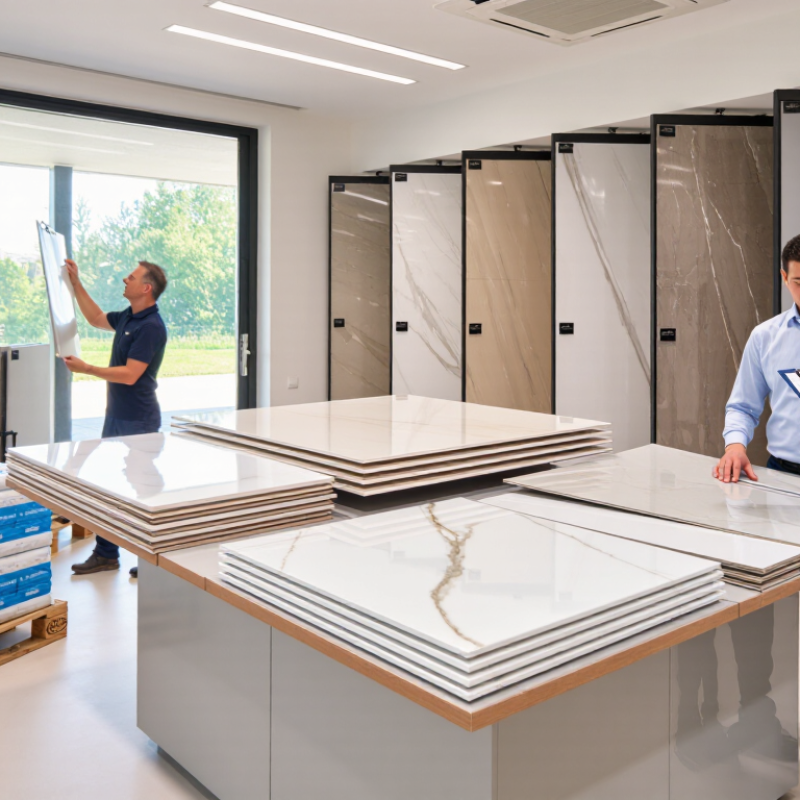
Packaging is easy to underestimate. Inspect corner protection, pallet stability, and moisture barriers before international shipment. Request samples from different production batches. Small shade variations can become obvious across a large lobby wall. A perfect specification sheet is helpful, but real samples sometimes reveal the harder truth.
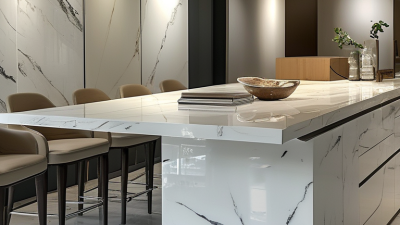
Choosing 3D UV marble sheets begins with the project, not the showroom wall. Ask where the sheets will be installed, how much contact they will receive, and what mood the space needs. For hotel reception desks, select deeper veining and a low-glare surface. For retail walls, brighter backgrounds can make narrow aisles feel wider. Bathrooms need moisture-resistant cores and carefully sealed joints. Looks still matter. Performance decides whether the design remains convincing.
Match sheet thickness, panel size, and texture to the installation method. Large panels reduce visible seams on feature walls, yet they demand accurate handling. Use subtle reliefs where dust cleaning is frequent. Reserve stronger 3D textures for focal areas with controlled lighting. Always compare a full-size sample under the project’s actual lamps. Warm LEDs can turn cool gray into beige. Test it twice. That small check prevents expensive color disputes.
In my installation experience, attractive samples sometimes failed because substrate movement was ignored.
The lesson is uncomfortable: design cannot repair poor preparation.
For international projects, document dimensions, core composition, surface finish, packing, and batch consistency. Ask for technical data, cleaning guidance, and independent test reports when performance is critical. Check fire, moisture, slip, and emissions requirements against local regulations. Do not assume one specification fits every country or building type. A reliable supplier should explain tolerances, replacement procedures, and lead times clearly. Keep spare sheets from the same batch for future repairs. Color drift happens. Natural-looking patterns may vary between production runs, so confirm acceptable variation before approval.
How to Choose 3D UV Marble Sheets for Global Projects?
For international projects, inspect more than the surface pattern. Check thickness tolerance, panel flatness, edge quality, and bonding strength. Request samples from different production batches. A glossy sample can hide slight waviness or color variation. Measure the sheet under both daylight and warm indoor lighting. Small differences become obvious across a large hotel wall.
Ask for independent test reports covering UV resistance, abrasion, impact, moisture, and fire performance. Confirm the test methods and dates. Requirements can vary by building type and destination. Also check VOC emissions, formaldehyde levels, and surface slip risks where relevant. Keep installation instructions with the project records. Poor substrate preparation can cause failure, even when the sheet itself passes testing. That detail is often overlooked.
Sustainability claims need evidence, not attractive wording. Look for recycled content records, environmental product declarations, life-cycle information, and responsible waste guidance. Ask whether the backing and decorative layers can be separated after use. Traceable raw materials improve reliability. Supplier audits help, but they are not perfect. I would still inspect packaging, storage conditions, and batch labels before shipment. A damaged corner or damp carton can create waste before installation begins. The safest choice is the sheet supported by clear documents, repeatable testing, and realistic project experience.
| Evaluation Dimension | What to Check | Relevant Standard or Method | Practical Project Benchmark | Documents to Request |
|---|---|---|---|---|
| Panel Construction | Confirm substrate type, surface layer, backing layer, total thickness, density, and internal bonding. | Product specification; thickness and density measurement; internal bond testing where applicable. | Declared thickness tolerance no greater than ±0.20 mm; consistent layer structure across production batches. | Technical data sheet, cross-section photographs, batch inspection report, approved sample. |
| Dimensional Stability | Check expansion, contraction, warping, and joint movement under changing temperature and humidity. | EN 438-2 dimensional stability methods; project-specific conditioning and flatness testing. | Flatness deviation typically controlled within 2 mm per 1,000 mm unless the installation specification requires tighter control. | Dimensional stability report, conditioning procedure, installation tolerance statement. |
| Surface Hardness and Scratch Resistance | Evaluate resistance to scratching from cleaning tools, furniture contact, and normal handling. | EN 438-2 scratch resistance; ISO 1518-1 or an equivalent agreed coating test. | Use a documented pass level appropriate to the application; decorative wall use and high-traffic commercial use should not share the same threshold. | Independent laboratory test report, test photographs, cleaning and maintenance instructions. |
| Impact Resistance | Check whether the sheet can withstand accidental knocks during transport, installation, and use. | EN 438-2 impact resistance or an agreed falling-ball impact method. | Specify the impact energy and acceptance criteria in the purchase contract; no cracking, delamination, or visible surface failure at the agreed level. | Impact test report, packaging specification, installation handling guide. |
| UV and Color Stability | Assess fading, yellowing, gloss change, cracking, and loss of surface performance under light exposure. | ISO 4892-3 fluorescent UV exposure; ISO 105-A02 or CIELAB ΔE evaluation for color change. | For interior areas receiving daylight, request a defined exposure duration and a maximum agreed color difference, such as ΔE ≤ 3.0 after the specified cycle. | UV aging report, color measurement data, gloss measurement data, warranty limitations. |
| Moisture and Water Resistance | Verify resistance to splash water, bathroom humidity, cleaning liquids, and edge penetration. | Water absorption and thickness swelling methods such as EN 438-2, plus project-specific immersion or humidity testing. | No visible delamination, bubbling, or edge swelling after the agreed test; wet-area installation must include sealed joints and compatible adhesive. | Water-resistance report, wet-area installation details, sealant compatibility statement. |
| Fire Performance | Confirm reaction to fire for the complete installed system, including sheet, adhesive, substrate, and joint treatment. | EN 13501-1 classification; ASTM E84 where required by the project jurisdiction; local building regulations. | Use the classification required by the building code; do not rely on a test performed on a different thickness, backing, or adhesive system. | Full-system fire test report, classification report, adhesive and backing details. |
| Smoke and Toxicity Considerations | Review smoke production and combustion-related requirements for public, residential, transport, or enclosed applications. | Applicable national fire code; EN 13501-1 smoke classification where relevant. | Obtain jurisdiction-specific approval before use in escape routes, public interiors, healthcare facilities, or transport projects. | Fire classification, smoke data, material safety information, regulatory approval records. |
| Formaldehyde and VOC Emissions | Check emissions from the sheet, resin, coating, adhesive, and backing materials after installation. | EN 717-1; ISO 16000 series; CDPH Standard Method where required for low-emitting interiors. | For healthy indoor environments, target a documented low-emission classification and verify the complete assembly rather than the sheet alone. | Emission test report, safety data sheet, adhesive VOC declaration, indoor-air certification if applicable. |
| Restricted Substances | Screen for restricted substances in pigments, plasticizers, coatings, flame retardants, and substrates. | REACH substance restrictions and SVHC communication; RoHS where the product is within its scope; applicable local chemical laws. | Written declaration of compliance supported by recent laboratory screening for high-risk materials and pigments. | REACH declaration, SVHC statement, RoHS declaration where applicable, laboratory screening report. |
| Hygiene and Cleanability | Assess stain resistance, resistance to common cleaners, surface porosity, and ease of disinfection. | EN 438-2 stain resistance and resistance-to-cleaning-agent methods; project-specific hygiene requirements. | No permanent visible staining or gloss damage from the approved cleaning agents used at the project site. | Chemical resistance report, approved cleaner list, maintenance manual, healthcare or food-area suitability statement if needed. |
| Slip and Surface Safety | If used on floors, steps, counters, or other contact surfaces, confirm the relevant slip and friction performance. | EN 16165, ASTM D2047, or the local method specified for the intended application. | Do not use a wall-panel test as evidence for flooring or stair applications; require an application-specific classification. | Slip-resistance report, intended-use statement, installation drawing, maintenance requirements. |
| Sustainability and Recycled Content | Verify recycled or renewable content, source claims, and whether percentages are pre-consumer or post-consumer. | ISO 14021 for self-declared environmental claims; chain-of-custody standards where certified material is claimed. | Require a percentage by mass, calculation boundary, evidence source, and independent verification where the claim affects project credits. | Environmental claim dossier, recycled-content calculation, supplier declarations, chain-of-custody certificate if applicable. |
| Environmental Product Data | Compare embodied carbon, manufacturing energy, transport assumptions, service life, and end-of-life options. | ISO 14025 Type III environmental declarations; ISO 14040 and ISO 14044 life-cycle assessment principles. | Prefer product-specific, third-party-verified data with a declared unit such as 1 m² of installed product or 1 kg of material. | EPD, life-cycle assessment summary, declared unit, system boundary, transport assumptions. |
| Packaging and Logistics | Check moisture protection, corner protection, pallet stability, container loading, and packaging recyclability. | ISTA distribution tests where required; ISPM 15 for regulated solid-wood packaging used in international shipping. | Packaging should prevent abrasion, warping, and water damage during the planned route; export wood packaging must meet destination rules. | Packing specification, container-loading plan, export packaging declaration, transport damage procedure. |
| Batch Consistency | Compare color, vein pattern, gloss, thickness, surface texture, and flatness between production lots. | Approved master sample; ISO 105-A02 visual grey scale or instrumental color measurement where specified. | Define acceptable color and gloss tolerances before mass production; inspect a statistically agreed sample from every lot. | Golden sample, color tolerance record, lot inspection report, nonconformity and corrective-action process. |
| Installation Compatibility | Confirm adhesive, substrate, cutting tools, joint sealant, ventilation, curing time, and movement-joint requirements. | Adhesive manufacturer technical instructions; ASTM C794 or equivalent adhesion method where relevant; project installation specification. | Require a tested and documented complete system; incompatible adhesive or an uneven substrate can cause failure even when the sheet itself passes testing. | Installation manual, adhesive compatibility test, substrate preparation guide, warranty conditions, installer training record. |

Global sourcing starts with a verified sample, not a digital image. Request the technical sheet, batch details, safety documentation, and test results for moisture, fire, and UV exposure. Check local building requirements before approval. Confirm panel dimensions and tolerances before ordering. Small differences matter.
Ask for two production samples when color matching spans several rooms. Compare them under daylight and artificial lighting. Use export-grade corner protection, moisture-resistant crates, and clear labels for each installation zone. An independent inspection before shipment can reveal warped panels, damaged edges, or uneven printing. Do not trust packaging photos alone.
Installation needs a flat, dry, and stable substrate. Let the sheets acclimatize indoors before cutting, especially after ocean transport. Experienced installers should measure walls twice, leave suitable expansion gaps, and use compatible adhesive. Seal joints carefully around sinks and high-humidity areas. Poor preparation remains a common failure point.
Maintenance is simple but not careless. Wipe surfaces with a soft cloth, warm water, and a mild cleaner. Avoid abrasive pads, strong solvents, and standing water near seams. Keep spare sheets from the same batch in a dry storage area. This is often overlooked. Record the batch number, installation date, cleaning method, and repair history. A perfect plan can still fail when local workmanship, climate, or replacement availability receives too little attention.
A practical 12-week planning baseline for international sourcing, installation, and long-term maintenance.
The schedule prioritizes technical approval and material sourcing before installation. Allow additional time for sampling, shipping, customs clearance, site readiness, and replacement planning. Actual project durations depend on destination, order volume, shipping method, local regulations, and site conditions.