How to Choose the Best UV PVC Marble Sheet?
Choosing a Uv Pvc Marble Sheet is not only about finding a convincing marble pattern. The right panel should suit the room, installation method, and daily cleaning routine. Looks matter. Performance matters more. Before comparing colors, consider where the sheet will be installed and how much moisture, heat, or impact it may face. An accent wall in a dry living room has different needs from a busy kitchen backsplash. Do not assume every glossy surface offers the same durability. That detail is easy to miss.
A useful comparison starts with product specifications. Ask for the panel thickness, surface finish, core composition, edge options, and installation guidance. Review stated resistance to stains, scratches, and moisture, and ask how those claims were tested. If possible, inspect a physical sample under the room’s actual lighting. Printed veining can look warmer or cooler than it appears online. Check whether the manufacturer provides care instructions and consistent batch information. Those checks help. Still, no single specification tells the whole story. Installation quality, substrate condition, and sealing details can affect the finished result. A careful choice balances appearance, verified product details, budget, and maintenance—not just the lowest price. This guide will explain what to compare, what questions to ask suppliers, and which trade-offs deserve a closer look. Some advice may depend on your room and local conditions. Use the product documentation as your final reference.
Understand the Materials and Structure of UV PVC Marble Sheets
A UV PVC marble sheet is a layered panel, not a single material. Its visible face usually combines a printed marble design with a UV-cured protective coating. Beneath it sits a PVC-based core, which may include mineral fillers or other additives. Construction varies by product. Look at the edge. A cross-section can reveal uneven layers, voids, or a very thin decorative film that a front-view inspection misses.
PlasticsEurope’s 2015 PVC Eco-profile gives rigid PVC a density of about 1.4 g/cm³. Treat this as a resin reference, not the finished sheet’s weight: fillers and surface layers change the final figure. Ask for the panel’s stated thickness, mass per square metre, and layer description, then compare like-for-like samples. A useful check. A heavier panel is not automatically stronger; bonding and core consistency matter too.
The UV coating protects the printed face, but it cannot correct a weak core or poor layer adhesion. Inspect cut edges for clean bonding, and ask how abrasion, moisture, and colour stability were tested. Test conditions matter. Data from one method may not predict performance in a steamy bathroom or sunlit room. I would be cautious about choosing from a marble pattern alone; attractive veining can distract from the structure underneath.
Define Your Application, Environment, and Design Requirements
Start with the surface’s job, not its stone pattern. A kitchen backsplash faces grease, heat, and frequent wiping; a bedroom feature wall does not. For wet areas, check the product’s stated water resistance, edge-sealing method, and substrate requirements. “Water-resistant” does not automatically mean suitable for constant splashing. Measure wall flatness and outlet cutouts before ordering. Small details matter.
Then assess the room. Sun-facing walls, humid bathrooms, and rooms near cooking equipment create different demands. Ask for test documentation on UV stability, moisture performance, and cleaning resistance rather than relying on appearance alone. The U.S. EPA’s indoor air quality guide reports that concentrations of some pollutants are often two to five times higher indoors than outdoors. This does not indicate that a particular sheet emits pollutants; it makes verified emissions information worth requesting. I have seen attractive finishes disappoint when maintenance needs were overlooked.
Design choices should suit both lighting and installation. Gloss can brighten a dim hallway, but it may reveal surface waviness under strong side lighting. Check sample panels in the actual room, beside flooring and cabinetry. The 2024 Global Status Report for Buildings and Construction, published by UNEP and GlobalABC, estimates that buildings account for 32% of global energy use and 34% of energy-related CO₂ emissions. Those figures describe the sector, not UV PVC sheets; ask for product-specific environmental documentation where available. A sample can still mislead. Lighting changes everything.
How to Choose the Best UV PVC Marble Sheet?
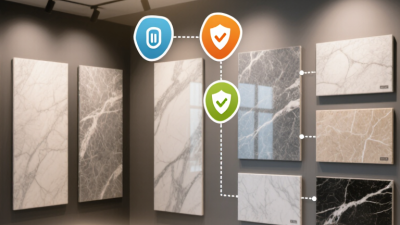
Define your application, environment, and design requirements before comparing product specifications.
How to read this chart: Scores are illustrative planning priorities from 1 (low) to 5 (high), not measured product-performance ratings. Actual moisture, heat, and sunlight exposure varies by site. Check each sheet’s technical specifications and installation requirements for your intended application.
Compare Thickness, Surface Coating, and Performance Specifications
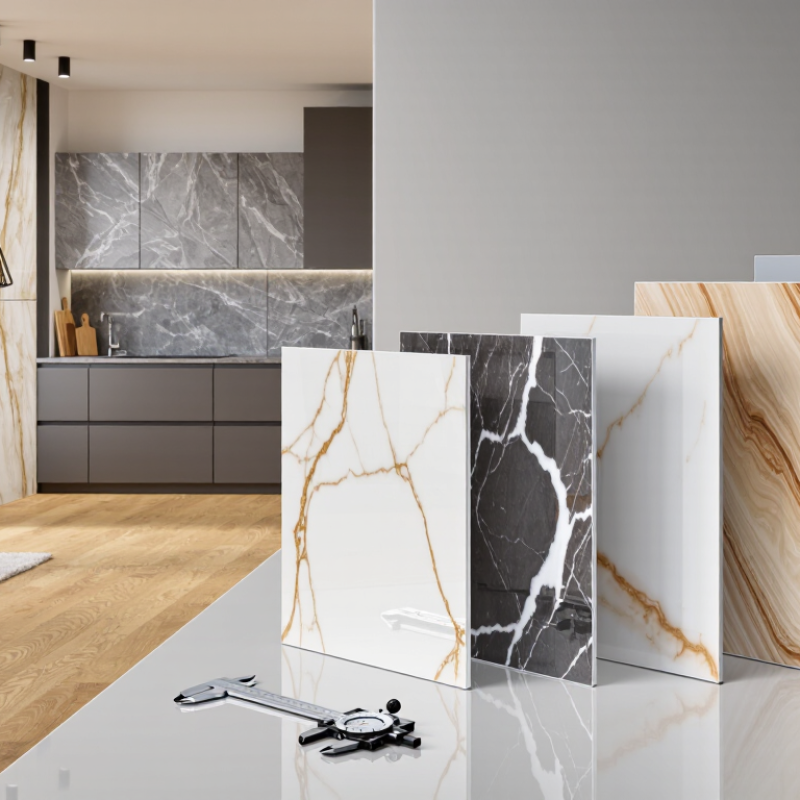
When comparing UV PVC marble sheets, start with actual thickness, not the printed pattern. Measure the core with calipers at several points; a nominal 3 mm sheet may vary, and uneven thickness can show at joints. Thicker panels generally feel stiffer, but they are not automatically better for every wall. Check the substrate, fixing method, and whether the sheet will span uneven surfaces. PlasticsEurope’s Plastics—The Facts 2023 reported 400.3 million tonnes of global plastics production in 2022. That scale makes clear why “PVC” alone says little about a finished panel’s quality.
Surface coating needs its own scrutiny. Ask for the coating type, thickness, and test results, rather than relying on “high gloss” or “scratch resistant.” ASTM D3359 cross-cut adhesion testing can help assess coating bond; ASTM D4060 measures abrasion resistance, though its results depend on test settings. Request the load, wheel, and cycle count. A bright sample may look convincing under showroom lights. It may still mark easily.
Compare performance data for water absorption, impact resistance, dimensional stability, and fire behavior, using the same test method across suppliers. Ask whether results apply to the complete sheet, including its coating and core. For a kitchen wall, wipe a sample with the cleaner you actually use, then inspect the edge and finish after drying. Small detail, big difference. Test reports can be incomplete, and a single lab result cannot predict every installation. Check the date, sample thickness, and testing laboratory before deciding.
Evaluate Appearance, Safety, and Ease of Maintenance
How to Choose the Best UV PVC Marble Sheet?
Appearance matters, but check it in the room where it will be installed. Hold a sample beside the actual lighting; glossy veining can look harsher under bright LEDs. Inspect the printed pattern, sheet edges, and joints for visible repetition or uneven color. A showroom sample may hide these flaws. I would not judge from photographs alone.
Safety deserves equal attention. Ask for a recent, independent test report covering VOC emissions, not just a “low-odor” claim. The U.S. EPA’s The Inside Story: A Guide to Indoor Air Quality reports that levels of several common organic pollutants can be 2–5 times higher indoors than outdoors. This broad finding is not specific to PVC sheets, but it supports checking product-emissions documentation before purchase. Also confirm the product is intended for your installation area and follow its stated fitting instructions.
Tips: Wipe a sample with a soft cloth and mild cleaner, then check for dulling or residue. Avoid abrasive pads unless the supplier confirms they are suitable. Ask how to clean seams and cut edges; these details are easy to overlook. A beautiful finish is not automatically an easy-care finish.
Check Supplier Quality, Certifications, and Installation Requirements
How to Choose the Best UV PVC Marble Sheet?
Check Supplier Quality, Certifications, and Installation Requirements
Ask suppliers for recent batch records and independent test reports, not just a glossy sample. A smooth face can hide uneven thickness, weak bonding, or color variation at the edges. Check whether any ISO 9001 certificate is current and covers the actual manufacturing site; it indicates a quality management system, not that every sheet meets your project needs. Request measured results for thickness, surface hardness, adhesion, and color stability. ASTM G154 Cycle 1 specifies 8 hours of UV exposure at 60°C, followed by 4 hours of condensation at 50°C. That is a test cycle, not a promise of a set number of outdoor years. Ask which cycle and acceptance limits the supplier used. Small detail. It matters.
Before ordering, get written installation instructions for the exact panel and adhesive system. Confirm that the substrate is flat, dry, clean, and compatible; dust on a wall can undermine an otherwise sound bond. Ask about required expansion gaps, since PVC movement varies with temperature and product formulation. Let the panels acclimate as instructed, and check whether cutting exposes an edge that needs sealing. On site, test-fit one sheet around corners and outlets before applying adhesive. I would not rely on a generic installer’s estimate alone; even capable crews can miss a product-specific detail. Keep the technical sheet, test report, certificate scope, and installation guidance with the purchase record.

 Hot Selling