Shandong Xiangying New Materials Technology Co., Ltd.

Choosing the right Uv Pvc Marble Sheet in 2026 requires more than comparing colors and prices. Modern buyers need a practical method. They must examine appearance, performance, documentation, and supplier reliability together.
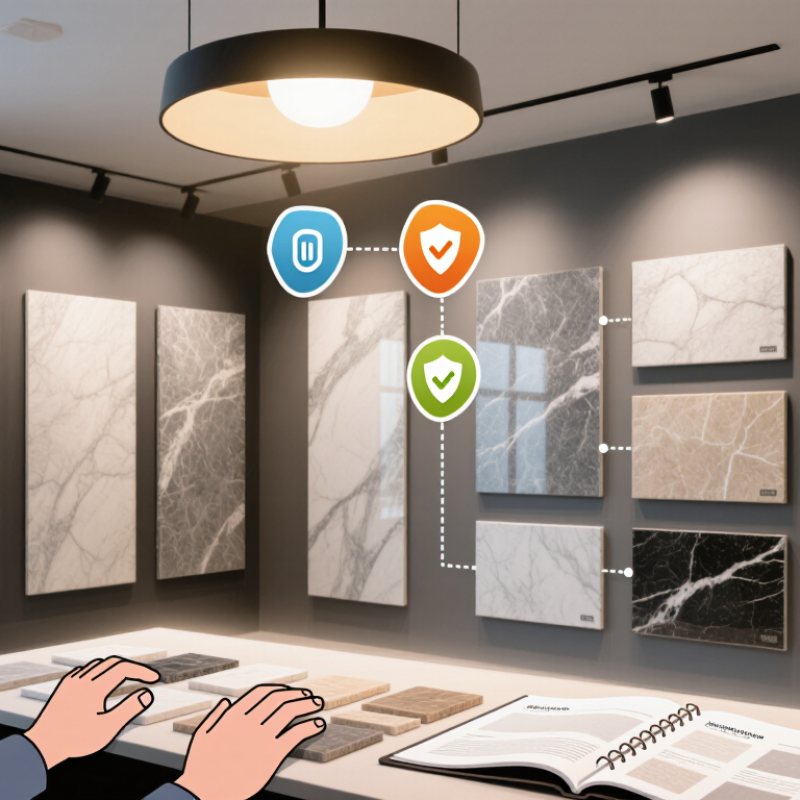
A showroom sample may look impressive under bright lighting. It can appear different beside a window or under warm lamps. Check the sheet in natural daylight. Run your fingers across the surface. A consistent texture, clean edge, and stable backing often reveal better manufacturing control. Also review thickness, gloss level, UV resistance, moisture protection, and installation requirements. These details matter in kitchens, bathrooms, retail walls, and hospitality interiors.
Ask suppliers for current technical data sheets and production information. Confirm the PVC core, surface film, protective coating, and available dimensions. Reliable manufacturers should explain testing methods, batch consistency, warranty terms, and quality inspection procedures. Independent test reports can support claims, but they should match the exact product series. Do not rely on attractive photographs alone.
Small samples help. Full-size samples help more.
Consider the installation environment before making a decision. Strong sunlight, frequent cleaning, humidity, and wall movement can affect long-term results. A cheaper sheet may require more preparation or replacement later. However, the highest-priced option is not automatically the best choice. I have learned that practical performance sometimes matters more than perfect veining. Even experienced buyers can overlook adhesive compatibility or edge finishing. That mistake is easy to make, and expensive to correct.
This guide explains how to compare Uv Pvc Marble Sheet options with clearer judgment. It focuses on evidence, realistic application needs, and dependable supplier communication.
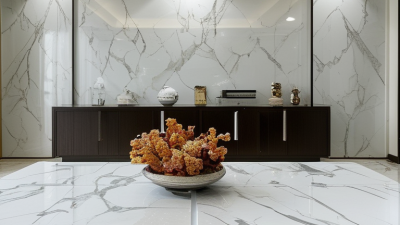
UV PVC marble sheets combine a PVC core with a decorative surface and a cured UV coating. The PVC core provides lightness, moisture resistance, and basic dimensional support. It does not make the panel structurally load-bearing. The UV coating protects the printed marble pattern from routine scuffs, stains, and cleaning exposure. Its quality depends on coating thickness, curing control, and adhesion to the surface.
Thickness usually ranges from 2.5 to 5 mm. A 2.5 mm sheet suits flat walls, ceilings, and renovation projects with a firm substrate. It is easier to cut, carry, and install. A 5 mm sheet feels more rigid and can hide minor surface irregularities better. However, thicker does not automatically mean better. The backing, core density, and bonding method still matter.
During material checks, inspect the sheet edge for voids, uneven layers, or weak bonding. Rub a hidden corner with a suitable cleaner, then check for color transfer or surface dullness. Ask for technical data covering thickness tolerance, coating adhesion, water absorption, and dimensional stability. A glossy finish may reveal wall defects under strong lighting. That detail is easy to miss. I would also compare samples under daylight and warm indoor light, because marble patterns can appear noticeably different.
When choosing UV PVC marble sheets in 2026, fire performance deserves more than a catalog statement. Ask for a current ASTM E84 report showing Class A results. This classification generally indicates a flame spread index of 0–25 and a smoke developed index of 0–450. Check both values.
Do not test or judge the sheet alone. ASTM E84 results can change with thickness, backing, adhesive, and mounting method. Request the exact tested assembly. The report should identify the manufacturer, product code, batch details, test date, and independent laboratory. A product page is not evidence. Inspectors may also compare the certificate with the delivered sample.
For projects using European specifications, review the EN 13501-1 classification carefully. Look for the reaction-to-fire class, such as A2, B, or C, plus smoke and flaming-droplet ratings.
A notation like B-s1,d0 provides more information than a single letter. Confirm that the tested thickness and installation match the wall or ceiling design. Fire-rated does not mean fireproof. That distinction matters.
I have seen attractive sheets pass visual checks but arrive with incomplete documentation. That is an uncomfortable gap. Keep samples, delivery records, and installation photographs for later review. If the supplier cannot explain the test setup, pause the purchase. Local building officials may require additional evidence, especially in corridors, kitchens, and public interiors. Safety decisions should follow the project code, not marketing language.
When I assess UV PVC marble sheets in 2026, I begin with surface durability, not the printed stone pattern. A pencil hardness result of 2H indicates useful resistance to light scratching. It does not guarantee immunity from keys, grit, or moving furniture. Ask whether testing used calibrated pencils, consistent pressure, and a documented surface direction. Small testing differences can change the result.
Abrasion data deserves equal attention. Request the test method, applied load, abrasive type, cycle count, and visible wear criteria. A sheet surviving 1,000 cycles cannot be compared fairly with another tested under 5,000 cycles. Check gloss loss, color change, and whether the protective layer reached the decorative film. Numbers without conditions are weak evidence. Look closely.
In a showroom or busy corridor, test a physical sample with fine sand, a damp cloth, and repeated rubbing. This is only a screening exercise, not a certified laboratory test. Observe whitening, dull patches, edge lifting, and texture loss under angled light. Also inspect cut edges; surface hardness cannot correct poor installation or moisture exposure. My preference is a sheet rated 2H or higher, supported by transparent abrasion results and realistic samples. I still keep one reservation: laboratory performance may not predict every household. Recheck the evidence against the room’s traffic level and cleaning routine.
How to Choose UV PVC Marble Sheets in 2026?
Project selection should begin with density, not appearance. A 2024 Grand View Research outlook projects PVC demand to grow at about 4.3% annually through 2030. That growth brings wider quality differences. Dense sheets usually feel firmer and resist surface dents better. They also weigh more. Check the technical datasheet, then verify density through ISO 1183 or ASTM D792 testing. Do not rely on hand-feel alone.
Weight must match the installation surface and handling plan. A 2.44-by-1.22-meter sheet, three millimeters thick, contains about 0.0089 cubic meters of material. At 1.4 grams per cubic centimeter, it weighs nearly 12.5 kilograms. That matters on tall walls. It affects adhesive coverage, lifting safety, and temporary support. A lighter sheet may simplify installation, but excessive lightness can suggest a hollow or poorly stabilized core. Sometimes, this is difficult to judge before cutting.
Size should follow the room, access route, and joint layout. Measure doorways, elevators, corners, and wall openings before ordering full panels. Large sheets reduce visible joints, but they demand flatter walls and careful alignment. Smaller sheets suit uneven surfaces and restricted access. The base wall should be clean, dry, and structurally sound. Follow the adhesive manufacturer’s open time and curing guidance. ASTM C920 provides useful sealant performance references, but it does not replace project-specific testing. Even experienced installers occasionally underestimate movement, heat, or ventilation. That mistake deserves review.
Match the sheet density, thickness, panel size, and installation method to the project. Areal weight is calculated from density × thickness, so heavier sheets normally require stronger adhesive coverage, better substrate preparation, and more careful handling.
| Project application | Typical size | Recommended installation focus |
|---|---|---|
| Interior wall renovation | 1220 × 2440 × 3 mm | Flat, dry substrate; full-surface adhesive coverage |
| Wet-area wall cladding | 1220 × 2440 × 4 mm | Seal joints and penetrations; use moisture-resistant adhesive |
| High-traffic commercial wall | 1220 × 2440 × 5 mm | Rigid backing, reinforced corners, mechanical support where required |
| Ceiling or lightweight partition | 1220 × 2440 × 3 mm | Check framing spacing, panel deflection, and overhead fixing safety |
The chart uses representative PVC marble-sheet engineering values. Areal weight is derived from density and thickness; confirm the final density, dimensions, tolerances, fire rating, and installation instructions with the selected product technical data sheet.
How to Choose UV PVC Marble Sheets in 2026?
A convincing surface starts with air quality, not appearance. Ask for recent, batch-linked VOC test results from an independent laboratory. Check TVOC levels and individual substances, rather than accepting “low odor” claims. Odor can fade quickly, while emissions may continue. Request the test method, chamber conditions, and report date. E1 formaldehyde classification is useful, but its meaning depends on the applicable regional standard. Confirm the actual limit and test basis.
Look closely at the warranty. A ten-year promise means little if it excludes peeling, moisture damage, color change, or poor adhesion. Read installation requirements before ordering. The wall may need leveling, dry storage, approved adhesive, and sealed edges. I have seen attractive panels fail because installers rushed the substrate preparation. That mistake is easy to repeat.
Calculate the complete cost, not only the sheet price. Include delivery, trims, adhesive, cutting, labor, waste, and future repairs. A cheaper panel may require more preparation or replacement sooner. Ask for a sample and inspect its backing, surface hardness, edge finish, and smell in a warm, closed room. Still, samples cannot prove long-term performance. That is an uncomfortable limitation. Reliable decisions combine physical inspection, verified documents, clear warranty terms, and realistic installation costs.
| Evaluation Dimension | What to Check | Budget Profile | Balanced Profile | Long-Term Value Profile |
|---|---|---|---|---|
| Panel Construction | Confirm the PVC core, decorative film, UV coating, backing layer, and total thickness on the technical datasheet. | PVC marble sheet, approximately 2.5–3.0 mm thick; verify whether the decorative layer is laminated or printed. | PVC marble sheet, approximately 3.0–4.0 mm thick, with a documented protective UV coating. | Approximately 4.0–5.0 mm thick, reinforced or rigid construction, with documented layer structure and batch traceability. |
| VOC Evidence | Request a recent chamber or material-emission report. Ask for the test method, conditioning period, sampling date, and TVOC result. | No independent report or only a supplier declaration. Suitable only when indoor exposure and project requirements are low. | Independent VOC report using a recognized method such as ISO 16000-6 or an equivalent national standard; TVOC result clearly stated. | Independent report with TVOC and individual VOC results, test conditions, laboratory identity, and a result suitable for the intended indoor-air requirement. |
| Formaldehyde and E1 | Do not treat an “E1” label as proof for a solid PVC panel. Check whether the test applies to a wood-based backing, adhesive, substrate, or the complete product. | E1 claim without a complete-product report: Verify carefully | Complete-product formaldehyde report or clearly identified backing-panel report; E1 reference explained in writing. | Complete assembly tested, with the report identifying the PVC sheet, backing, adhesive, and test method. For EN 717-1 chamber testing, the commonly cited E1 limit for wood-based panels is ≤0.124 mg/m³. |
| VOC Interpretation | There is no single universal TVOC pass limit for every PVC marble sheet. Compare results with the building standard, local regulation, or project specification. | Use only where the purchaser accepts limited emissions documentation. | Compare the result against the selected indoor-air program before ordering. | Use a project-specific acceptance limit and require testing of the complete installed assembly when adhesives or backing materials may affect emissions. |
| Surface Durability | Request abrasion, stain, chemical-resistance, adhesion, and scratch-test information. Results are meaningful only when the method and rating scale are stated. | Basic protective coating; obtain a sample before approving kitchens, bathrooms, or high-traffic areas. | Documented resistance testing and a physical sample for cleaning, scratching, edge, and seam checks. | Documented performance testing plus a maintenance schedule, repair procedure, and replacement-panel availability. |
| Moisture Use | PVC is moisture-resistant, but seams, cut edges, penetrations, adhesives, and the wall behind the panel still require correct detailing. | Suitable for decorative dry-area applications after confirming installation instructions. | Suitable for many interior wet-area applications when the manufacturer-approved adhesive, sealant, and joint details are followed. | Written wet-area system details, compatible sealants, substrate requirements, and inspection criteria are provided. |
| Fire Performance | Ask for a report for the exact thickness and construction. A PVC label alone does not establish a fire classification. | No project-specific fire report: Confirm suitability | Test report supplied for the selected panel construction, with the applicable classification system identified. | Project-specific fire documentation, installation limitations, and evidence covering the complete wall or ceiling assembly where required. |
| Warranty | Check duration, coverage, exclusions, installation conditions, color variation, yellowing, delamination, moisture damage, and claim procedure. | Target at least a written 2-year product warranty; installation errors and substrate movement are commonly excluded. | Target a written 5-year product warranty with defined coating, adhesion, and manufacturing-defect coverage. | Target a written 10-year product warranty where available, with clear claim documentation and a stated remedy or replacement process. |
| Expected Service Life | Service life depends on UV exposure, cleaning chemicals, temperature, substrate movement, installation quality, and maintenance. | Appropriate for lower-demand decorative areas after sample inspection. | A practical choice for normal indoor wall applications when installation and cleaning instructions are followed. | Best suited to demanding interiors where documented durability, repairability, and replacement support reduce lifecycle risk. |
| Indicative Material Cost | Use local quotations. Prices vary with thickness, texture, quantity, freight, cutting, packaging, and import costs. | Illustrative planning range: US$8–15 per m². | Illustrative planning range: US$15–28 per m². | Illustrative planning range: US$28–50+ per m². |
| Installation Cost | Include substrate preparation, adhesive, trims, sealant, cutting, waste, access, and labor—not only the panel price. | Illustrative installation allowance: US$10–20 per m². | Illustrative installation allowance: US$12–25 per m². | Illustrative installation allowance: US$18–35+ per m² because detailing, testing, and preparation may be more extensive. |
| Waste and Accessories | Add trims, corner profiles, adhesive, sealant, protection, delivery, and cutting waste to the quotation. | Allow approximately 10–15% of panel area for cutting waste and add accessories separately. | Allow approximately 8–12% for waste, depending on layout and sheet dimensions. | Allow approximately 5–10% when panel sizes and layout are optimized; include approved system accessories. |
| Estimated Installed Total | A useful comparison formula is: (panel price × purchased area) + installation + accessories + freight + substrate preparation + disposal. | Illustrative total: about US$20–40 per m² before taxes and major substrate repairs. | Illustrative total: about US$32–65 per m² before taxes and major substrate repairs. | Illustrative total: about US$55–110+ per m² before taxes and major substrate repairs. |
| Best Value Test | Choose the lowest option that satisfies safety documentation, appearance, moisture, fire, warranty, and lifecycle requirements. | Lowest initial cost, but the highest documentation and replacement risk. | Often the best balance between evidence, appearance, durability, and installed cost. | Higher initial cost may be justified where downtime, replacement labor, emissions control, or compliance risk is expensive. |