Shandong Xiangying New Materials Technology Co., Ltd.

Choosing a Wood Wall Panel for global sourcing in 2026 requires more than comparing prices and surface finishes. Buyers must examine moisture resistance, core composition, fire performance, formaldehyde emissions, packaging, and installation tolerances. A beautiful oak panel can still fail when shipped through humid ports or installed against an uneven wall.
The Food and Agriculture Organization’s Global Forest Resources Assessment 2020 reports that forests cover approximately 31% of the world’s land area, or 4.06 billion hectares. This figure supports responsible wood sourcing, but it does not guarantee responsible manufacturing. Ask suppliers for chain-of-custody evidence, species details, drying methods, and current test reports. The Forest Stewardship Council also emphasizes traceability from certified forests through processing and distribution. Paperwork matters. Physical samples matter more.
Architect and mass-timber specialist Michael Green said, “Wood is the only structural material that grows naturally and is renewable.” His statement is inspiring, though it needs careful qualification. Wood is renewable only when forests, factories, transport, and end-of-life planning are managed responsibly. In practice, compare a 2.4-meter sample beside a window. Check color variation, edge stability, joint alignment, and odor after unpacking. Request an installation mock-up before placing a large order.
Industry market reports, including Grand View Research’s wood-based panels analysis, indicate continued demand from residential, commercial, and renovation projects. Yet global forecasts are not purchase specifications. They cannot predict your building’s humidity, local code requirements, or installer skill. The safest sourcing decision combines verified data, tested samples, transparent suppliers, and a willingness to reconsider initial assumptions.
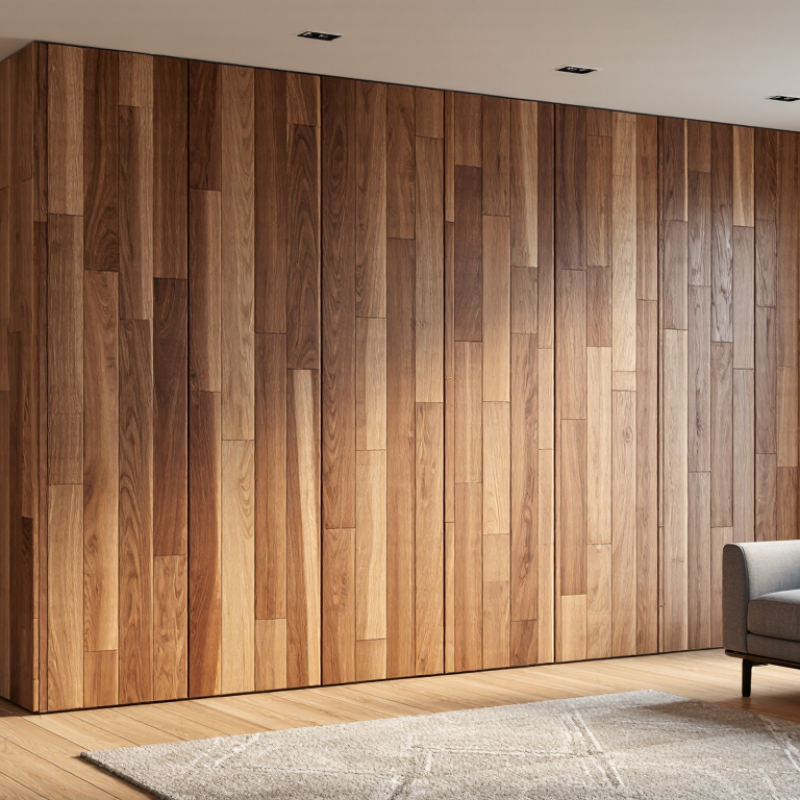
For global sourcing in 2026, define the project before comparing wood wall panels.
Record room function, wall dimensions, traffic level, humidity, cleaning routines, and installation dates. A quiet hotel corridor needs different performance from a busy school entrance.
Write the brief in measurable terms. Specify acoustic targets, fire-performance requirements, surface durability, panel thickness, joint style, and acceptable color variation. Do not rely on a mood board alone. It rarely captures maintenance reality.
Application should guide the wood panel construction.
Veneered engineered panels may suit reception areas needing stable dimensions and consistent grain. Solid timber can create warmth, but it may require closer humidity control.
Slatted panels can improve visual rhythm and acoustic comfort when backed with suitable acoustic material. Wet or frequently cleaned spaces require carefully selected finishes and edge protection. Keep it practical.
A reliable sourcing brief should request technical data, test reports, installation drawings, sample approvals, and packaging details.
Confirm whether documents match the supplied panel, not an earlier version. Check local building, fire, emissions, and material rules with qualified professionals. Requirements differ by country.
A beautiful sample can mislead. I have seen appearance receive more attention than cleaning access and replacement planning. That mistake becomes expensive after installation. Leave room for revision when site conditions, budget, or moisture readings challenge the original assumption.
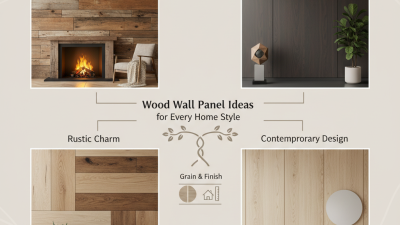
How to Choose Wood Wall Panels for Global Sourcing in 2026?
Wood species affects appearance, stability, and sourcing risk. Oak offers visible grain and dependable hardness for busy interiors. Walnut creates a darker, richer mood, but color variation can be significant. Poplar is lighter and often more economical, although its softer surface may dent during handling. I have learned that attractive samples can hide practical weaknesses.
Core materials matter just as much. Plywood generally handles humidity and repeated movement better than standard particleboard. MDF provides a smooth face for paint or veneer, but moisture exposure needs careful control. Ask suppliers for density, formaldehyde-emission data, moisture resistance, and bonding specifications. These documents should match independent test results, not only sales claims.
Tips: Compare the same panel size across three species. Check the back, edges, and joints, not just the front. For surfaces, consider natural veneer, melamine, laminate, or painted finishes. Veneer feels authentic, while laminate usually offers stronger scratch resistance. Matte finishes can hide fingerprints, but they may show dust in dark colors. Request production samples and inspect them after transport simulation. Small details matter. I would also test fire performance and cleaning resistance for the destination market. No sample predicts every installation condition, so leave room for reassessment before placing a large order.
For global sourcing in 2026, sustainability starts with traceable wood, not attractive grain. The FAO Global Forest Resources Assessment 2020 recorded 420 million hectares of forest lost between 1990 and 2020. Choose suppliers that disclose forest origin, species, harvest region, and recycled content. Chain-of-custody certification can strengthen evidence, but it is not proof of perfect sustainability. I would still request shipment-level records.
Ask for current certificates, scope statements, audit dates, and corrective-action reports. Check whether the certificate covers the exact factory and product line. A plywood panel may contain certified veneer but uncertified core material. That detail matters. Test formaldehyde emissions against the destination market’s rules, such as the European emissions framework or US TSCA Title VI requirements. Request laboratory reports tied to production batches, not generic brochures.
Regulatory checks need practical documents. For European Union shipments, the EU Deforestation Regulation requires due-diligence information, including commodity origin and geolocation data, for covered wood products. The EU Timber Regulation still affects certain legacy supply-chain questions. The US Lacey Act also requires accurate declarations for applicable wood products. Verify scientific species names, harvest country, customs codes, invoices, and supplier declarations before production. UNEP’s 2023 Global Status Report states that buildings and construction generated about 37% of global energy- and process-related carbon dioxide emissions. Lower-impact panels help, but transport, adhesives, packaging, and replacement cycles can change the result. I would not accept vague claims. Insist on evidence, and record every unresolved gap.
Check sustainability documentation, formaldehyde emissions, certifications, and market-specific regulatory requirements before approving a supplier.
Chart focus: Maximum formaldehyde emission limits under U.S. EPA TSCA Title VI for common composite wood categories. Lower values indicate stricter emission limits.
Source: U.S. EPA TSCA Title VI emission limits, 40 CFR Part 770. Limits shown in parts per million (ppm).
Choosing wood wall panels for global sourcing in 2026 requires more than comparing catalog prices.
Supplier evaluation should include timber origin, drying controls, panel construction, and export experience. FAO’s Global Forest Resources Assessment 2020 records 4.06 billion hectares of forest worldwide, yet supply conditions vary sharply by region. Ask for recent production records, chain-of-custody documents, moisture readings, and factory audit evidence. Do not rely on polished photographs alone.
Price comparisons should use landed cost. Include panel prices, packaging, inland transport, duties, insurance, and expected waste. The World Bank Commodity Markets Outlook shows that global commodity prices can shift with energy costs, trade conditions, and economic demand. Request a firm quotation with validity dates. Then test three samples under the same lighting. Check color variation, edge alignment, surface hardness, odor, and installation tolerance. A sample that looks excellent may still fail after humidity changes. That happened in one of my earlier comparisons.
Production capacity needs practical proof. Request monthly output for the previous six months, current order loading, standard lead time, and maximum repeatable quantity. Compare those figures with your project schedule, not the factory’s best-case promise. ITTO market reviews repeatedly highlight the importance of timber supply conditions and production trends in international wood-product planning. A supplier should explain backup sources without changing the approved specification. Visit the plant when possible, or use an independent inspection before mass production. Capacity claims are easy. Consistent delivery is harder.
Global sourcing wood wall panels in 2026 requires more than attractive grain and competitive pricing. Build a quality plan before requesting quotations. Ask for moisture readings, core density, surface finish, fire test records, and tolerance data. Request production samples from the actual line, not only showroom pieces. A sample can hide variation. Define acceptable limits for color, warping, edge damage, and panel dimensions. Use a pre-shipment inspection with photographs and random carton checks. In my experience, written criteria prevent arguments better than friendly promises. Still, inspections are not perfect. A small defect may pass when cartons are stacked tightly.
Shipping planning should begin with the installation schedule. Confirm panel lengths, crate sizes, gross weights, and container loading diagrams. Protect corners with rigid guards and separate finished faces with soft sheets. Salt air and sudden humidity changes can damage poorly packed panels. Ask the supplier for commercial invoices, packing lists, origin details, and accurate product descriptions. Confirm tariff classification with a licensed customs professional in the destination country. Rules and duties can change. Do not rely on an old shipment file. Build time for inspections, port congestion, and document corrections. A cheaper freight quote may become expensive after storage fees.
Installation support deserves equal attention. Request measured drawings, fixing recommendations, acclimation instructions, and replacement-panel procedures. Wood should adjust to the project environment before installation. Record room temperature and humidity. Substrates must be flat, dry, and structurally sound. For complex layouts, arrange a technical review before cutting. Keep spare panels from the same batch. This is practical insurance. Yet some guidance may remain too general. Test one wall first, then revise the method if joints open or tones shift.