How to Choose the Best UV Marble Sheet for Your Project?
Choosing a Uv Marble Sheet is not only a color decision. It affects installation, cleaning, and how a finished wall handles daily use. A glossy white sheet may brighten a narrow bathroom, while a warm-veined design can soften a kitchen backsplash. Yet a convincing marble pattern cannot tell you whether the panel suits a damp room or a particular wall substrate. Details matter.
The wider building context makes material choices worth checking carefully. The United Nations Environment Programme and Global Alliance for Buildings and Construction reported that buildings accounted for 34% of global energy demand and 37% of energy- and process-related carbon dioxide emissions in 2022. These figures describe the sector, not UV marble sheets specifically. They are a useful reminder to consider service life and replacement needs, rather than appearance alone. When comparing products, review panel thickness, core material, surface-coating details, care instructions, and the manufacturer’s warranty. Ask for technical data on moisture resistance and indoor emissions where relevant, and confirm that the stated use matches your project. Looks matter. One caveat: marketing terms can sound more precise than the available test evidence. This guide explains how to compare finishes, performance claims, installation requirements, and value, so your choice fits the actual room—not just the sample board.
Understanding UV Marble Sheets and Their Key Properties
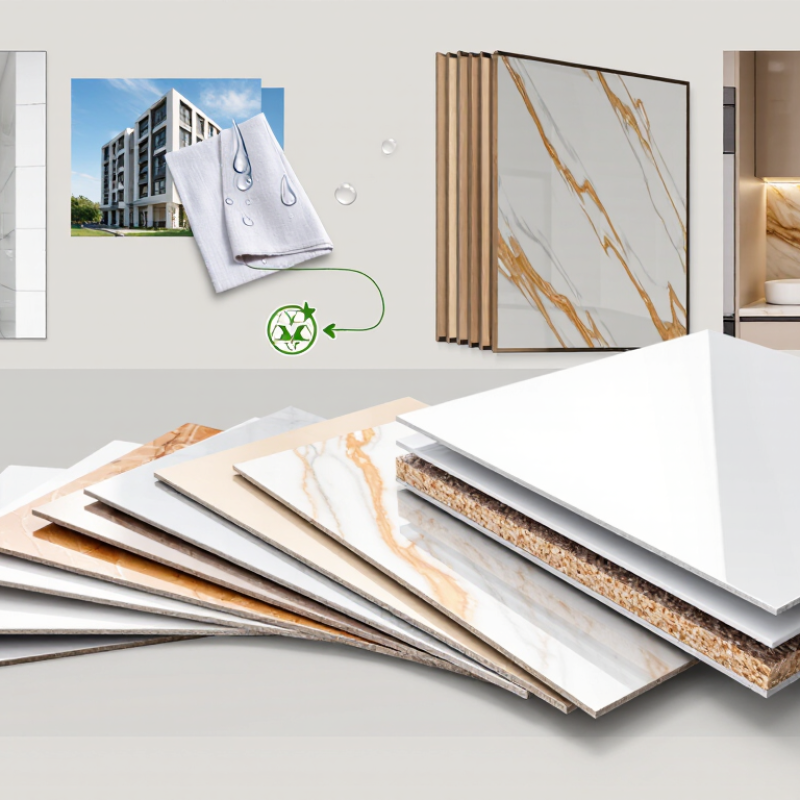
UV marble sheets are decorative panels with a printed stone pattern and a UV-cured surface layer. Their core may be PVC, composite material, or another panel substrate, so construction varies. The coating gives the surface a smooth finish and can make routine wiping easier. Not real stone. Color depth and gloss depend on the print and finish, and bright light may reveal repeating patterns. Look closely. At a cut edge, the panel’s layered structure may show, unlike a solid marble slab. This matters around corners, outlets, and exposed joints.
Choose a sheet by checking its thickness, rigidity, surface finish, and stated resistance to moisture and everyday wear. In a bathroom, inspect how the manufacturer recommends sealing seams; water can still reach vulnerable edges. A UV finish is not automatically scratch-proof or heat-proof. Keep hot cookware away, and test cleaners on an offcut when possible. Ask for a physical sample and view it beside your flooring or cabinetry, since screen colors can mislead. Check the panel’s substrate and installation instructions before buying. A thin sheet may bend over an uneven wall, while a glossy finish can emphasize bumps. Slight pattern mismatches at joins are easy to underestimate.
How to Choose the Best UV Marble Sheet for Your Project?
Thickness is one factor to consider when selecting a UV marble sheet. Thinner panels can suit lighter decorative applications, while thicker panels may be preferable where greater panel rigidity is needed. The options shown are representative nominal thicknesses, not a universal standard; check the product specification and installation requirements for your project.
Identifying Your Project’s Size, Location, and Performance Needs
A good UV marble sheet should fit the room, not just the mood board. Measure each wall or surface, including corners, niches, and openings. Record the sheet dimensions and plan where seams will fall. A large veined pattern can look convincing across a broad wall, but awkward cuts may interrupt its flow. Measure twice. I still find that a paper layout catches details a quick site estimate can miss.
Location changes the specification. A dry living-room feature wall has different demands from a bathroom wall near a shower or a kitchen backsplash beside a cooktop. Check the product’s technical sheet for moisture, heat, cleaning, and installation limits. Do not assume a glossy surface is suitable for every wet area. Confirm that the substrate is sound, flat, and compatible with the recommended adhesive. Not every room.
Performance needs include more than appearance. Ask how the surface handles routine cleaning, minor scratches, and the light it receives. Strong daylight can make colors appear different from a showroom sample, so view a sample in the actual room at several times of day. Also check edge finishing and joint details before ordering. A small mismatch may not matter on one panel; across a long wall, it can become obvious. If site conditions are unusual, pause and confirm the installation method with a qualified installer.
Comparing Thickness, Surface Finish, and Core Material
Choosing a UV marble sheet starts with the job it must do.
Thickness affects stiffness, weight, and how well a panel stays flat, but thicker is not automatically stronger. A dense, consistent core can outperform a thicker sheet with weak internal structure. Check the supplier’s thickness tolerance and recommended support spacing, especially for large wall areas or cabinet doors. Small panels are forgiving. Long spans are not.
Surface finish changes both appearance and upkeep. High gloss reflects light and can make a narrow room feel brighter, yet it also shows fingerprints and fine scratches more clearly. Matte finishes soften reflections, though textured surfaces may take longer to clean. Ask for a sample and view it under the lighting used in the actual room. A small sample can still mislead; patterns and sheen may look different across a full panel.
Core material matters at edges, around cutouts, and in humid spaces. Compare the stated core composition, panel weight, and guidance for sealing exposed edges. Do not rely on a marble-like face to indicate water resistance throughout the sheet. Some details are easy to overlook. I would also check that cutting leaves a clean edge, since a beautiful surface can look unfinished beside a rough opening. Product data is useful, but a sample test may reveal what a brochure does not.
Checking Installation Requirements and Long-Term Maintenance
Measure the finished wall and check whether the sheet is approved for wet areas. Confirm substrate flatness, moisture limits, panel thickness, joint layout, and the specified adhesive or fixing method. Dry-fit around outlets and corners; a few millimeters can move a seam into the splash zone.
Small detail. Big difference.
Plan ventilation during adhesive work.
The EPA’s The Inside Story: A Guide to Indoor Air Quality reports that some indoor pollutant levels are often two to five times outdoor levels. This figure is not specific to UV panels, but it supports choosing compatible, low-emission adhesives and airing the room.
Before installation, follow the product instructions for room and panel temperature; cold, damp walls can weaken bonding. Keep water away from cut edges and joints, especially near sinks and showers. Use a soft cloth and mild detergent if the care instructions allow it. Abrasive pads may dull the glossy surface. Dry standing water and inspect silicone joints every few months.
EPA moisture guidance advises keeping indoor relative humidity below 60%, ideally around 30–50%, to limit mold risk. That is room-level guidance, not a panel durability guarantee.
Do not assume “water-resistant” means waterproof. Recheck loose edges early; a small repair may become a panel replacement if ignored.
Evaluating Samples, Certifications, and Supplier Reliability
Before comparing UV marble sheets, request samples from the production batch, not just a showroom display. Check the face under daylight and warm indoor lighting. Look for cloudy patches, pinholes, uneven gloss, and sharp color shifts. Compare thickness and backing, too. A small offcut can reveal edge chipping during cutting. Samples can still mislead; one attractive piece does not prove batch consistency.
Ask for test reports tied to the exact sheet construction, including its surface coating and substrate. For UV durability, review accelerated-weathering conditions, such as exposure cycles under ASTM G154 or ISO 4892-3, rather than accepting “UV resistant” alone. For indoor projects, request emissions documentation and verify its scope and validity with the issuing body. The U.S. EPA’s indoor-air guidance notes that some pollutant concentrations can be two to five times outdoor levels, and sometimes higher. That makes emissions evidence worth checking, though it does not predict surface wear.
Small details matter. Check whether the supplier can provide batch numbers, written thickness tolerances, lead times, and replacement stock. Ask how damaged sheets are handled, and request recent references for comparable projects. A polished certificate is not a delivery record. One weak point in this process: buyers often judge reliability from a single sample, then skip written acceptance criteria. Don’t. Record the approved color, gloss, dimensions, and defect limits before ordering.

 Hot Selling