Shandong Xiangying New Materials Technology Co., Ltd.


Leave Your Message

Top 10 Garden Fence WPC Manufacturers for Global Buyers?

Demand for durable outdoor materials is reshaping how buyers assess garden fencing. Grand View Research estimated the global wood-plastic composites market at about USD 7.1 billion in 2023, with projected growth through 2030. This figure covers many applications, not garden fences alone. That distinction matters.

For Garden Fence Wpc buyers, a market forecast is only a starting point. Real performance depends on the blend of wood fiber and polymer, UV protection, drainage, fixing systems, and local climate. A fence panel facing strong afternoon sun may fade or expand differently from one installed in a shaded, wet garden. Samples help, but they cannot replace years of field use. Even experienced buyers can miss that.

This guide compares ten manufacturers for global sourcing, focusing on product range, production capability, export experience, customization, and the clarity of technical documentation. It also highlights questions worth asking before requesting a quotation: What is the profile’s wall thickness? How are color and dimensional tolerances checked? Can the supplier provide installation guidance and relevant test reports? A polished catalog is not proof of consistent quality. Some suppliers may be a better fit for small projects, while others suit larger orders; neither is automatically the best choice. The ranking should be treated as a practical shortlist, not a certification or guarantee. Manufacturer data and claims should be verified directly before purchase.
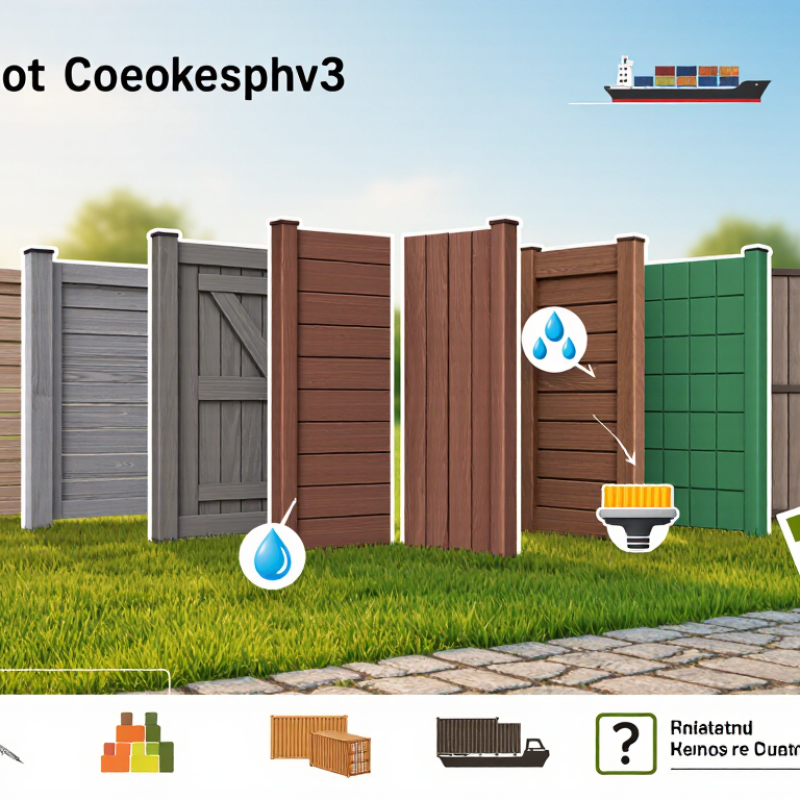
Top 10 Garden Fence WPC Manufacturers for Global Buyers?

What WPC Garden Fencing Is and How It Is Made

WPC garden fencing is made from a blend of wood fibers or fine wood flour and thermoplastic resin. The wood gives the surface a natural-looking grain, while the polymer binds the material into sturdy profiles. Pigments and processing additives may also be included. The exact recipe varies between manufacturers, so “WPC” does not describe one identical product.

During production, the ingredients are mixed and heated until they can be shaped. The blend passes through a die that forms boards, rails, or posts. Workers then cool and cut the profiles to length. Some products receive a textured finish or an additional outer layer for improved resistance to stains and weathering.

That matters. Buyers should ask whether a sample matches the finished production run.

The material can resist moisture better than untreated timber, but it is not maintenance-free or immune to damage. Sunlight, temperature changes, and poor drainage can affect its appearance and stability over time. Installation details count: boards need suitable support and room to expand, as specified by the manufacturer.

Not always obvious.

A useful supplier should provide clear composition details, care guidance, and relevant performance data rather than relying on broad durability claims.
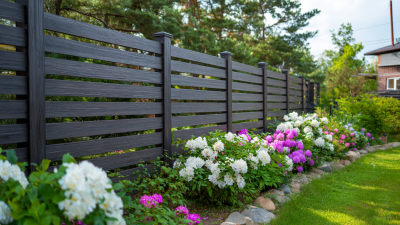

How to Evaluate WPC Fence Manufacturers for Global Projects

Choosing a WPC fence manufacturer for a global project takes more than comparing catalog photos. Request a current product specification sheet covering board dimensions, material composition, UV resistance, water absorption, and expansion range. Then compare those figures with the climate and installation conditions at your site. A fence beside a sunny, exposed coastline may need different performance evidence from one in a sheltered garden.

Ask for samples from a production batch, not only a showroom display. Check the surface finish, board edges, color consistency, and fit between boards and posts. Small differences matter. Request relevant test reports and confirm which laboratory issued them. Ask how the manufacturer controls batch quality, handles damaged deliveries, and packages long boards for international shipping. A neat sample cannot prove that every shipment will match.

Clarify lead times, minimum order quantities, spare-part availability, and warranty exclusions before signing a purchase agreement. Ask for installation drawings and fixing details, especially where wind loads or uneven ground may affect the design. References from projects with similar weather and logistics can reveal useful practical experience. Still, references are not guarantees. One detail buyers sometimes overlook is after-sales communication: agree on response times and document contacts before production begins. A capable supplier should answer technical questions clearly, while admitting where project-specific engineering advice is needed.

Top 10 WPC Garden Fence Manufacturers for Global Buyers

Top 10 WPC Garden Fence Manufacturers for Global Buyers

For global buyers, a useful top-ten shortlist compares factory capability, not catalogue claims. WPC demand is growing, but forecasts differ. Grand View Research valued the global WPC market at USD 7.1 billion in 2023 and projected an 11.5% CAGR through 2030. MarketsandMarkets forecast growth from USD 7.1 billion in 2023 to USD 9.2 billion by 2028, a 5.4% CAGR. Different methods matter. These estimates cover the wider WPC market, not garden fences alone.

When evaluating manufacturers, request wood-flour and resin specifications, UV-stability test results, water-absorption data, and batch traceability. Ask for a full-size sample, not just a polished swatch. Check that posts, caps, rails, and fasteners work as one system. A low quote may exclude costly accessories. Also review production capacity, packaging strength, lead times, and export experience; container damage can quickly erase savings.

Reliable suppliers explain installation gaps, drainage, thermal expansion, and maintenance clearly. Compare warranties by exclusions and test conditions, not years alone. ISO 9001 certification can support consistent processes, but it does not prove outdoor durability. Request independent test reports for the exact profile and color. One limitation remains: many public rankings rely on marketing claims rather than audited factory data. Verify references and, where practical, inspect a recent shipment.

Top 10 WPC Garden Fence Manufacturers for Global Buyers

A practical, brand-neutral comparison framework. Use the evidence column to evaluate suppliers; specifications and performance vary by product and should be confirmed with test reports and written quotations.

No. Evaluation dimension What buyers should compare Evidence to request Why it matters
1 Material composition Wood-fibre and polymer types, recycled content, additives, and whether the profile is capped or uncapped. Product data sheet, material declaration, and sample cross-section. Composition and profile construction affect appearance, processing, and outdoor performance.
2 Weathering and UV performance Test method, exposure duration, colour-change results, and the conditions behind any performance claim. Laboratory report identifying the tested product and test conditions; ask whether results apply to the offered colour and profile. Sunlight and weather can affect colour and surface appearance. Results from one formulation may not apply to another.
3 Water absorption and dimensional change Reported water-absorption and dimensional-change results, with test duration and method stated. Test report for the specific WPC profile, plus installation guidance for drainage and expansion gaps. Moisture exposure and temperature variation can influence the dimensions and condition of composite products.
4 Mechanical properties Flexural strength, stiffness, impact performance, and the test setup used to obtain each value. Independent or traceable laboratory results and the product’s installation or support-span limits. Fence design loads depend on the profile, span, posts, fixings, and local site conditions.
5 Fire-performance documentation Applicable local fire requirements and the classification or test result for the exact product assembly. Current test report or classification document, including scope and limitations. Fire requirements differ by market and application; do not assume a result for one product applies to all profiles.
6 Profile and dimensional consistency Profile dimensions, wall thickness, tolerances, straightness, surface finish, and colour consistency. Dimensioned drawings, tolerance specifications, inspection records, and production samples. Consistent dimensions help with assembly, alignment, and replacement-part compatibility.
7 Quality management and traceability Batch identification, incoming-material checks, in-process inspection, and handling of nonconforming goods. Quality procedures and relevant, current certificates. ISO 9001 certification concerns a quality-management system, not a guarantee of product performance. Traceability and documented controls make it easier to investigate defects and maintain consistency.
8 Installation system and accessories Compatibility of boards, posts, rails, caps, fasteners, and gates; required clearances and support spacing. Complete installation manual, bill of materials, and written confirmation of accessory compatibility. A complete system and clear instructions reduce fit-up issues and installation uncertainty.
9 Export packaging and logistics Bundle protection, pallet or container loading plan, package dimensions, shipping terms, and replacement-part availability. Packing specification, loading photographs or plan, and a written quotation stating the delivery term and shipment scope. Long profiles need suitable handling and protection to reduce transport damage and simplify unloading.
10 Warranty and after-sales terms Coverage period, exclusions, installation requirements, claim evidence, remedy, and responsibility for shipping or labour. Full written warranty and claims procedure for the destination market. Warranty wording defines the actual remedy; a headline duration alone does not describe coverage.

Comparing Product Ranges, Quality Standards, and Export Capabilities

Comparing ten garden-fence WPC manufacturers is more useful when the focus stays on product range, quality evidence, and export readiness. Some suppliers offer only standard boards, while others provide matching posts, gates, caps, and privacy-screen patterns. Check whether dimensions, colors, and surface finishes remain consistent across the range. A sample board beside a product sheet can reveal differences that a catalog photo hides.

Quality claims need context. Ask for current test reports and clear details about the tested material, including its wood-plastic composition and resistance to moisture, fading, and impact. Compare warranty terms, inspection procedures, and batch consistency rather than relying on broad phrases such as “weather resistant.” Small details matter. A fence exposed to strong sun or frequent rain may age differently from one installed in a mild climate, and no product is maintenance-free.

Export capability goes beyond shipping a container. Confirm packaging protects board edges, and check lead times, spare-part availability, export documents, and communication during order changes. Request photos of packed goods or a sample packing list when practical. An attractive sample is not enough. A comparison table can still miss real-world handling issues, so buyers should leave room for questions and verify details before placing a large order.

How to Select and Verify a WPC Fence Supplier

Selecting a WPC fence supplier takes more than comparing catalog photos. A polished surface can hide uneven color, weak profiles, or inconsistent production. Ask for the exact composition, profile dimensions, reinforcement details, and installation guide. Then compare these against your project’s wind exposure, fence height, and post spacing. Request a physical sample. Check its edges, surface texture, and color in daylight, not just under showroom lighting. Small details matter.

Verify that test reports identify the same product construction you plan to buy. Confirm who performed the tests, when they were completed, and what performance they measured. Ask for recent project references and permission to contact a buyer about delivery accuracy and after-sales support. A factory video call can help you inspect storage, packaging, and production equipment, though it cannot replace an independent inspection for a large order. Review lead times, replacement-part terms, packaging protection, and written warranty conditions before paying a deposit. Keep specifications and approvals in writing. One limitation: samples may not reveal batch variation, so request production-batch photos or a pre-shipment inspection when consistency is critical.

Top 10 Garden Fence WPC Manufacturers for Global Buyers: Supplier Verification Checklist

Checklist items to verify before selecting a WPC fence supplier. Bar values count the specific evidence requests listed for each category; they are not supplier ratings or industry benchmarks.

How to use: Request product-specific specifications and test reports, check quality-control and batch-traceability records, and confirm shipping and warranty terms in writing. Requirements may vary by destination market and project.