Shandong Xiangying New Materials Technology Co., Ltd.

China’s WPC panel market is attracting buyers who want wood-like texture with less routine upkeep. Yet “WPC” covers different recipes, surface treatments, and production standards. A close look at a sample can reveal what a brochure cannot: the feel of the embossing, the edge finish, and whether the color shifts under daylight.
Grand View Research estimated the global wood-plastic composites market at about US$7.1 billion in 2023, with projected growth through 2030. This figure covers more than panels, so it should not be mistaken for China’s panel-market size. It does, however, show why buyers are comparing suppliers more carefully. For this guide, useful checks include production consistency, documented testing, customization capacity, and communication about installation limits. One caveat matters: attractive product photos do not prove long-term performance.
Dr. Michael Carus, a bioeconomy specialist associated with nova-Institute, has discussed the importance of evaluating materials beyond a single performance claim. In paraphrase: “Judge material choices by performance and resource use across their life cycle.” That is a helpful lens, not a substitute for product-specific evidence. The manufacturers listed here should therefore be assessed against the same questions: What is in the panel? How is it tested? What support follows delivery? Small details count. This ranking can guide a shortlist, but it cannot replace a sample review or a factory conversation. Some uncertainty remains, and buyers should acknowledge it.
Top 10 WPC Panel Manufacturers in China
Understanding WPC Panels and Their Main Applications
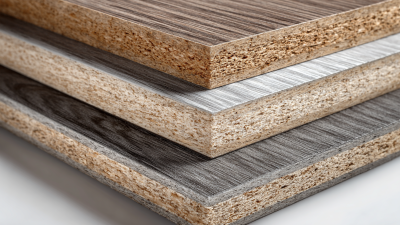
Wood-plastic composite (WPC) panels combine wood fibers or flour with thermoplastic resin and selected additives. Manufacturers vary the blend, so panels can differ in weight, texture, moisture resistance, and stability. Check product specifications rather than assuming every WPC panel performs the same way.
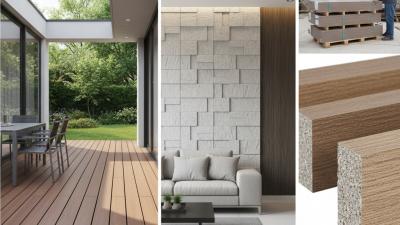
Many panels are used for interior wall cladding, ceilings, partitions, and decorative surfaces. Their consistent profiles can create a neat finish in hallways or living spaces. Some formulations suit exterior cladding, where they face rain and sunlight. However, color fading, heat movement, and surface wear remain practical concerns. Proper spacing and a suitable substructure help accommodate expansion, but installation details depend on the product and site.
Tips: Ask for installation instructions and test samples before ordering. Feel the surface, inspect the edges, and compare color in natural light. For outdoor use, confirm the panel’s intended exposure and maintenance needs. Small gaps matter. A panel that looks convincing indoors may not suit a hot, exposed wall.
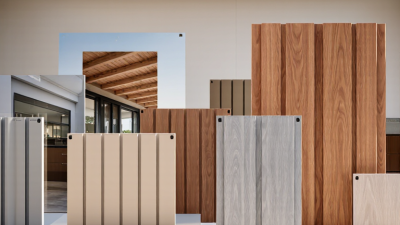
Wood-plastic composites (WPCs) combine wood fibers or flour with thermoplastics and additives. The chart shows approximate composition ranges commonly used for WPC formulations; exact proportions vary by product and application.
Applications: WPC panels are commonly used for interior and exterior wall cladding, decorative surfaces, and other building components. Formulations are selected to suit the intended use and exposure conditions.
China’s WPC panel manufacturing industry is organized as a supply chain, not a single factory type. Raw-material suppliers provide wood flour, recycled polymers, and additives. Compounders blend these inputs; panel makers then use extrusion, cooling, cutting, and surface finishing. China Forestry Statistical Yearbook 2022 reports 311.7 million cubic meters of wood-based panel production. This figure shows the scale of China’s wider panel sector, not WPC output specifically. Not the whole story.
Factories may specialize in interior cladding, outdoor decking boards, or decorative sheets. Their capabilities differ in profile design, color matching, surface embossing, and dimensional control. Panels are often packed in strapped bundles, with edge protection to limit transit damage. China Plastics Industry Yearbook tracks the broader plastics sector, but public data do not always separate WPC panels from other plastic products. This makes supplier comparisons less straightforward than a catalog suggests. Two panels with equal thickness may still differ in density, tolerances, or weathering performance.
Tips: Request a recent test report, production tolerances, and samples from the same batch. Check cut edges for voids, then compare color and surface texture under daylight. A neat sample helps, but it cannot prove long-term stability. Ask how the factory controls batches; the answer may reveal more than a polished brochure.
Choosing a WPC panel manufacturer takes more than comparing prices. Start by asking what the panels contain and how the wood-plastic blend is controlled. Consistent raw materials can affect color, surface texture, and dimensional stability. Request technical data for the intended use, especially where panels may face moisture, sunlight, or temperature changes.
Ask for recent test reports and check that they identify the specific product being offered. Useful checks may cover water absorption, bending strength, and relevant fire performance. A polished sample is not enough. Compare several pieces for edge finish, thickness, and color variation, then ask whether production batches are inspected against written specifications. Small details matter.
Review quality records, production capacity, packaging, and the process for handling defects. Clear answers and traceable documents are stronger signs of reliability than broad promises. If possible, visit the facility or request a live production walkthrough. Ask how the manufacturer manages changes in suppliers or formulation, since these can affect consistency. No checklist is perfect; a report may not reflect every shipment. Balance documentation with sample checks, practical questions, and realistic expectations about service and lead times.
| No. | Assessment criterion | Suggested weight | Evidence to review | What to check |
|---|---|---|---|---|
| 1 | Quality management system | 12% | Current certificates, issuing-body details, and audit scope | Verify any claimed ISO 9001 certification with the issuing body and confirm that its scope covers the relevant manufacturing site and activities. |
| 2 | Product range and technical specifications | 10% | Product catalog, datasheets, drawings, and sample panels | Compare stated dimensions, profiles, colors, surface finishes, tolerances, and intended applications with the project requirements. |
| 3 | Raw-material traceability | 12% | Material declarations, supplier records, and batch documentation | Check whether the manufacturer can document the composition and batch traceability of wood or plant fiber, polymers, additives, and surface layers. |
| 4 | Production and process controls | 14% | Factory audit, process-control records, inspection plans, and batch samples | Review controls for production consistency, dimensional checks, appearance, defect handling, and product identification. |
| 5 | Testing and market compliance | 12% | Recent test reports from suitably qualified laboratories and applicable declarations | Match the tested product, thickness, finish, and intended use to the order. Confirm that test methods and regulatory requirements are appropriate for the destination market. |
| 6 | Customization and technical support | 10% | Approved drawings, sample approval records, and written capability details | Confirm whether requested dimensions, colors, profiles, packaging, and labeling can be supplied, and clarify any tooling or sample-approval requirements. |
| 7 | Export documentation and experience | 8% | Redacted shipping documents, packing lists, and export references where available | Check the supplier’s ability to prepare accurate commercial and shipping documents for the destination and agreed delivery terms. |
| 8 | Capacity and delivery planning | 8% | Written production schedule, order capacity confirmation, and shipment plan | Assess whether the proposed schedule is specific to the order, includes inspection and packing time, and explains how delays will be communicated. |
| 9 | Warranty and after-sales process | 7% | Written warranty terms, claims procedure, and replacement policy | Check coverage, exclusions, claim deadlines, evidence requirements, and responsibility for defective or damaged goods. |
| 10 | Environmental and material claims | 7% | Product declarations, supporting test documents, and relevant management-system certificates | Request evidence for claims such as recycled content or emissions performance; verify that documents apply to the specific product and market. |
| Total suggested weighting | 100% | Score each criterion using comparable, product-specific evidence. | ||
Suggested scoring: Rate each criterion from 1 (insufficient evidence) to 5 (strong, verified evidence), then apply the suggested weighting. Confirm certificates and test reports with the relevant issuing or testing organization.
Profiles of ten notable WPC panel manufacturers in China are most useful when they reveal what each factory actually makes. Some focus on co-extruded outdoor cladding; others produce interior wall panels, decking, or custom profiles. Compare core material, panel thickness, surface finish, and available lengths. Ask for a cut sample: a crisp corner and even color tell you more than a polished catalogue image. Small details matter.
Grand View Research’s 2024 Wood Plastic Composites Market report estimated the global market at about US$7.4 billion in 2023 and projected continued growth. This figure covers WPC products broadly, not Chinese panels alone. Treat it as market context, not proof that any supplier is reliable. For each profile, check whether the manufacturer provides current test reports, batch traceability, and clear installation guidance. A weak point in many comparisons is relying on sales claims when independent test evidence is missing.
Tips: Request matching samples from shortlisted factories, then compare weight, edge finish, and dimensional consistency. Confirm test methods and warranty terms in writing. A sample can look excellent; production batches may still vary.
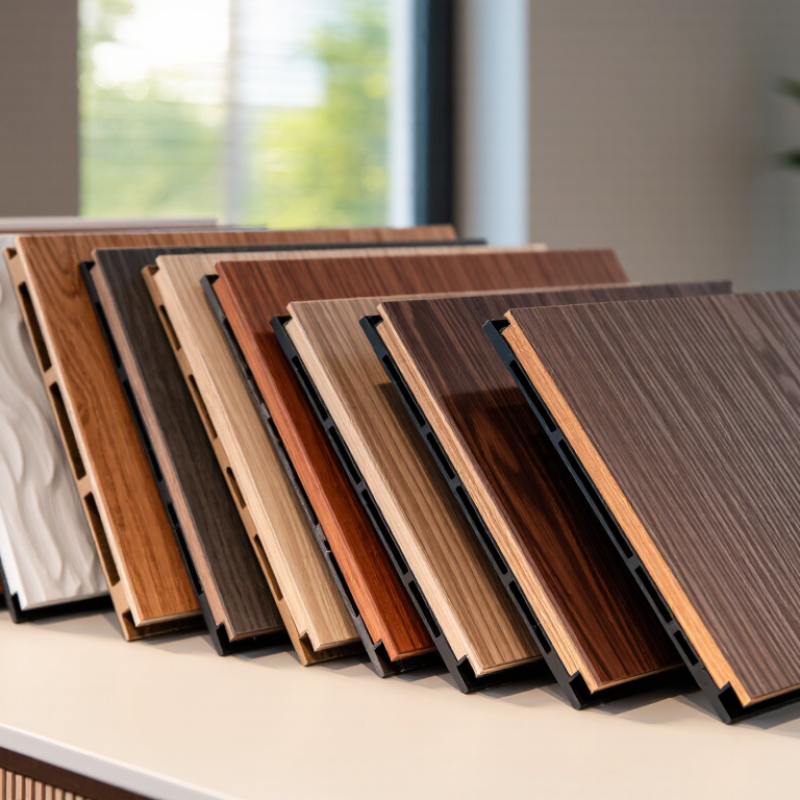
A useful comparison of China’s WPC panel manufacturers starts with product range. Some focus on hollow panels for lighter wall installations. Others offer solid boards, co-extruded surfaces, or decorative profiles with wood-grain textures. Check whether colors and dimensions remain consistent across batches. Samples matter. A polished sample can look convincing, but it may not represent routine production.
Manufacturing capability is more than stated output. Ask about extrusion lines, custom tooling, dimensional checks, and surface-finish controls. Request technical data for water absorption, impact resistance, and outdoor use where relevant. Clear answers and traceable test records make comparisons more reliable. Lead times deserve attention, too. A factory may handle large orders well but struggle with frequent design changes.
Markets shape what suppliers offer. Export-focused manufacturers may provide protective packaging, installation guidance, and product documents for overseas buyers. Domestic suppliers may be more responsive to smaller runs or local design preferences. Compare minimum order quantities, sample costs, and communication during specification changes. I would not rank a supplier by catalog size alone; actual consistency can be harder to judge than a brochure suggests. Ask for recent production photos and references from comparable projects.