Shandong Xiangying New Materials Technology Co., Ltd.

 Hot Selling
Leave Your Message
Shandong Xiangying New Materials Technology Co., Ltd.
Choosing the right Wall Panels Wpc starts with understanding where they will be installed. WPC combines wood fibers with plastic polymers, but the proportions and manufacturing methods vary by product. Hollow panels are lighter and may suit decorative walls, while solid panels can feel sturdier and handle impact better. Co-extruded panels add a protective outer layer, which may help resist stains and fading. Textured or embossed finishes can create a timber-like appearance, though the effect depends on the lighting and viewing distance.
Details matter. A showroom sample may look warmer than a full wall under cool indoor lighting. Compare samples in the actual room, and check panel thickness, fixing methods, expansion gaps, and the manufacturer’s care instructions. For bathrooms, balconies, or other damp areas, confirm that the product is rated for the intended exposure; “water-resistant” does not always mean suitable for constant moisture. Outdoor buyers should also review UV performance and installation guidance. Not always obvious.
This guide examines the main WPC wall panel types and explains the trade-offs behind each. It considers appearance, durability, maintenance, installation, and cost without assuming one option fits every project. Product specifications are not perfectly consistent across brands, so verify claims against current technical documents. The best choice is the one that suits the room, the climate, and the installer’s skill—not simply the panel with the most convincing display.
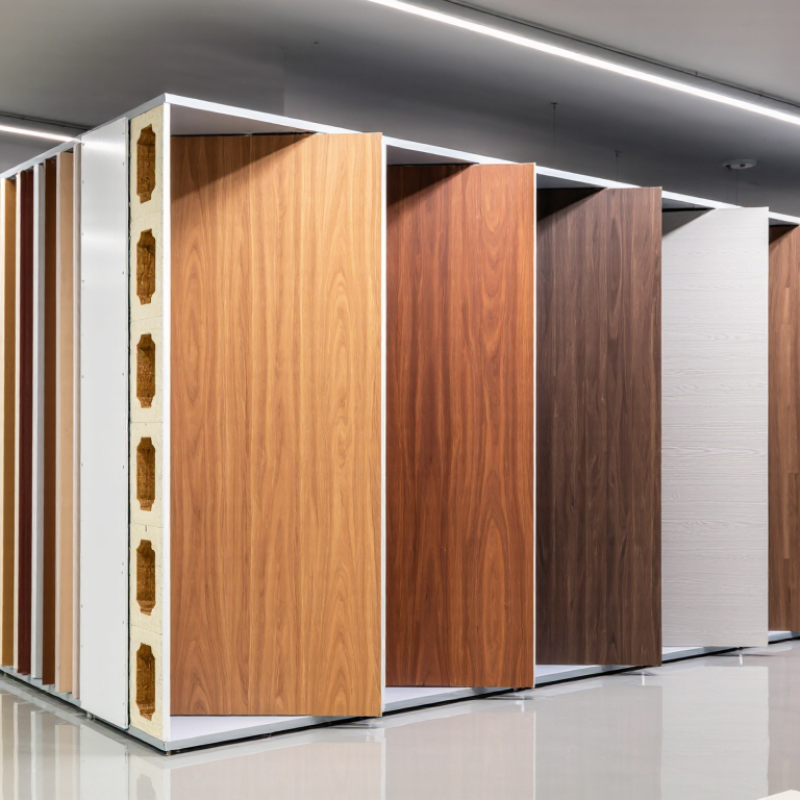
WPC wall panels are made from wood fibers or fine wood flour mixed with thermoplastic resin. Common resins include polyethylene, polypropylene, or PVC, though recipes differ by product and intended use. Small amounts of stabilizers, pigments, and processing aids may improve color consistency, weathering performance, or flow. The ingredients are blended, heated, and pushed through a shaped die in an extrusion process. The profile cools, is cut to length, and may receive a brushed, embossed, or laminated finish. That is the basic route. Actual formulations vary.
Those details affect real use: a hollow profile is lighter, while a denser panel can feel more solid under hand. Surface texture can hide small marks, but it cannot correct uneven framing behind the wall. WPC generally handles splashes and routine cleaning better than untreated wood, yet it should not be treated as waterproof. Heat and sunlight can still cause movement or fading, so leave the expansion gaps specified by the manufacturer. Ask for the panel’s composition, installation guidance, and test data rather than relying only on a wood-look sample. One caution: a nice showroom finish tells little about the cut edge or long-term performance. Check those details.
| Panel Type | Typical Construction or Finish | Common Applications | Main Advantages | Considerations | Best Suited For |
|---|---|---|---|---|---|
| Solid WPC Panels | A dense, substantially filled profile made from wood particles or fibers, thermoplastic resin, and processing additives. | Feature walls, partitions, and areas where a more substantial panel is preferred. | Rigid feel; can be cut and fastened using suitable woodworking tools and installation methods. | Generally heavier and uses more material than a hollow profile. Product weight and fastening requirements vary. | Projects prioritizing a solid profile and a robust appearance. |
| Hollow-Core Panels | Extruded profiles with internal cavities, often made with a series of ribs or chambers. | Interior feature walls, ceilings, and some exterior cladding systems when the product is rated for outdoor use. | Lower weight and material use than a comparable solid profile; cavities can make handling easier. | Edges and fixing points may need appropriate trims or support. Performance depends on profile design and installation. | Projects where lighter panels and efficient installation are priorities. |
| Slatted or Linear Panels | Narrow, repeated ribs or slats, supplied as individual profiles or as panels with a backing system. | Interior accent walls, reception areas, and exterior façades when specifically designed and approved for exterior exposure. | Creates a linear visual effect; gaps or grooves add texture and can provide visual depth. | Grooves can collect dust outdoors or indoors. Check whether the backing and fixing system suit the intended location. | Decorative walls where a ribbed or modern linear finish is wanted. |
| Co-Extruded or Capped Panels | A core profile is formed with an additional outer polymer layer during co-extrusion. The cap formulation and coverage vary by product. | Exterior cladding and other applications exposed to weather, provided the product is rated for the conditions. | The outer layer can improve resistance to surface staining, moisture uptake, and fading compared with some uncapped formulations. | Does not make a panel waterproof in every installation or eliminate maintenance. Inspect product-specific test data and warranty terms. | Outdoor projects where an enhanced surface layer is desired. |
| Embossed or Wood-Grain Panels | A surface texture is pressed, embossed, or otherwise formed to create a patterned finish; it may be used with solid, hollow, or capped profiles. | Interior feature walls and exterior cladding where the panel is rated for outdoor use. | Provides a textured appearance and can help reduce the visual prominence of minor surface marks. | Texture does not by itself determine durability, slip resistance, or weather performance; check the full product specification. | Projects seeking a textured or wood-like visual finish. |
| What WPC Wall Panels Are and How They Are Made | |||||
| Basic Material | WPC means wood-plastic composite. Wall-panel formulations commonly combine wood flour or wood fiber with a thermoplastic such as polyethylene (PE), polypropylene (PP), or polyvinyl chloride (PVC), plus additives. | The exact ingredients and proportions differ by manufacturer and product. Stabilizers, pigments, processing aids, and other additives may be used to support processing, color, or intended performance. | |||
| Typical Manufacturing Steps | Raw materials are prepared and blended, then heated and processed through an extruder. The softened composite is shaped through a die, cooled, calibrated, and cut to length. | Surface embossing, printing, lamination, or co-extrusion may be added depending on the design. Manufacturing details vary with the polymer, profile, and finish. | |||
| Choosing the Best Type | There is no single best profile for every project. Select by location, support system, appearance, exposure, and the panel’s tested specifications. | For any application, confirm the product’s intended use, installation instructions, fire classification where required, UV and weather performance for outdoor use, and applicable local building requirements. | |||
Note: WPC formulations, profile dimensions, performance, and suitability vary by product. Use manufacturer technical documentation and local building requirements when specifying or installing panels.