Shandong Xiangying New Materials Technology Co., Ltd.

A Wpc Board may look like timber, but its performance depends on more than appearance. Wood fibers or flour are combined with a thermoplastic binder, then shaped into boards for decking, cladding, fencing, and other uses. The recipe varies by manufacturer. So does the result. A board that suits a shaded balcony may not be right beside a pool or on a sun-exposed terrace.
This guide explores the main types buyers are likely to encounter: solid-core boards, hollow boards, capped or co-extruded boards, and foamed profiles. Each has trade-offs. Solid boards feel substantial and can suit areas needing greater rigidity, while hollow boards are lighter and may need careful support spacing. Capped products add a protective outer layer, but the cap does not make every board maintenance-free. Foamed boards can be easier to handle, yet their strength and fixing requirements deserve close attention. Details matter.
When comparing options, check the product’s technical data, recommended joist spacing, slip information, warranty terms, and installation instructions. Look at samples outdoors, not only under showroom lights. Color can shift in sunlight, and surface texture may feel different when wet. One useful reminder: “wood-plastic composite” is a broad category, not a guarantee of identical quality. Even a well-reviewed board can disappoint if installed over an unsuitable frame. There is no perfect type; that is worth admitting. The best choice is usually the one that fits the site, not the one with the boldest brochure claims.
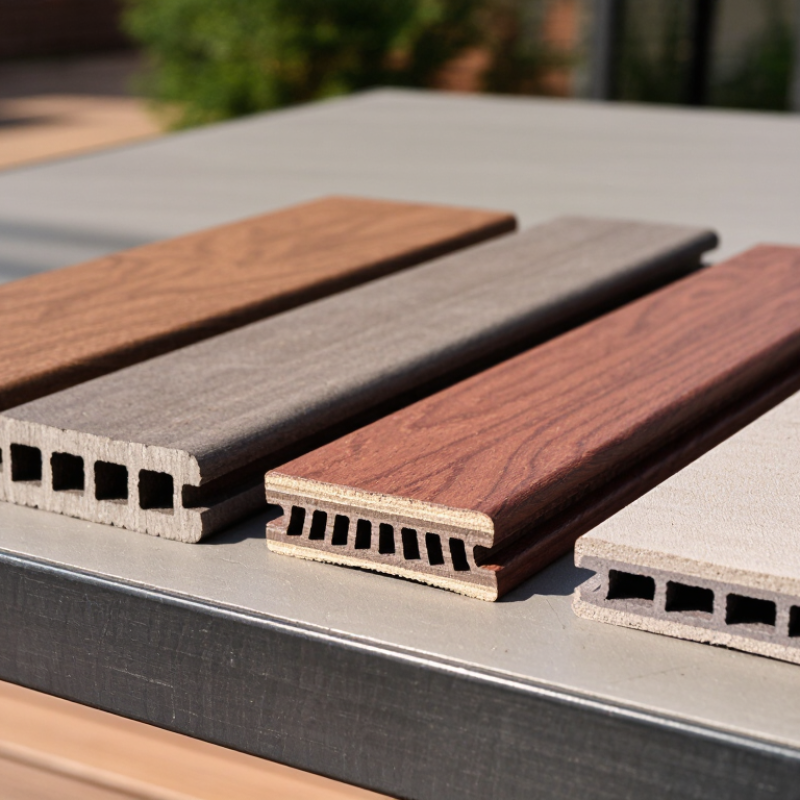
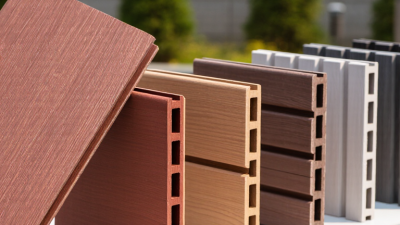
WPC boards are easiest to compare along two separate axes: core structure and surface layer. Different jobs. The core may be solid or hollow, with hollow designs containing channels that reduce weight and material use. Solid boards feel more substantial when handled, but that alone does not prove they will perform better in every installation. Check the product’s load guidance and fixing requirements.
The surface may be uncapped or protected by a co-extruded layer bonded around the core. An uncapped board exposes its wood-plastic composite directly, while a capped board has an added outer skin intended to improve resistance to moisture, stains, or fading. The exact performance depends on the material and construction, so compare test data rather than relying on labels. Small print matters.
Texture is another classification, but it describes appearance rather than core structure. Boards may have a brushed grain, embossed pattern, or smoother finish. A textured surface can look convincing up close, though its grip and cleaning needs should be checked in real conditions. I would not assume every raised grain is equally slip-resistant. Ask for sample pieces, inspect cut edges, and note whether the surface layer continues around them. A tidy sample can still hide installation details.
Wood-plastic composite (WPC) boards combine wood fiber with a thermoplastic polymer. A typical formulation contains about 30–60% wood fiber and 30–50% polymer, often measured by weight. The remaining share may include pigments, stabilizers, lubricants, or mineral fillers. These are working ranges, not a universal recipe. Small differences matter.
Higher wood-fiber content can create a more natural, textured appearance, but it may also increase moisture sensitivity if the board is poorly made or exposed to standing water. More polymer can improve cohesion and surface protection, though it does not guarantee long-term performance. Decking, cladding, fencing, and indoor panels may use different blends to suit their expected loads and exposure. Check the product’s technical sheet for the actual formulation and intended use.
Manufacturing details count as much as the percentages. Fiber size, drying, mixing, and extrusion temperature can affect density, finish, and consistency from board to board. A neat recipe can still mislead. For a practical comparison, inspect a cut edge, ask whether the stated percentages are by weight, and review relevant test data. I would not judge a board by fiber content alone; installation conditions and maintenance can change how it performs over time.
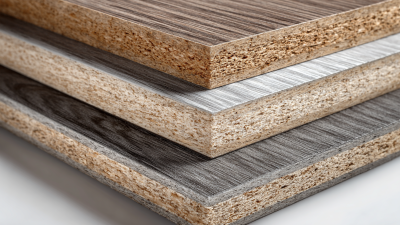
Solid-core WPC boards are dense profiles, typically weighing 1.2–1.4 g/cm³. That range is noticeably heavier than many hollow profiles of similar size. It feels substantial. The added mass can help a board resist dents and flexing under everyday loads, though density alone does not guarantee performance. A board’s wood-fiber content, polymer mix, and internal consistency also matter.
On site, the weight is easy to notice when carrying a full-length board or lifting it onto a frame. Plan handling and support accordingly. The dense core may also provide more material around screws, but proper fastening still depends on the board design and installation guidance. Check the product’s technical sheet for measured density and intended use. If possible, inspect a sample: look at the cut edge, surface finish, and any signs of voids. There is a practical catch. Heavier boards can be less convenient to move, and a density figure cannot tell you how a specific board will behave in changing temperatures or moisture. It is useful data, not the whole answer.
Hollow-core WPC boards contain channels running through their interior, leaving solid outer walls around empty spaces. This design uses less composite material than a solid board of similar dimensions. It can also make long lengths easier to lift, carry, and position during installation. A worker may notice the difference when moving several boards across a deck or patio.
The weight savings are useful, but they do not guarantee equal strength. Wall thickness, channel shape, material formulation, and support spacing all affect how a board performs. Check the product’s load ratings and installation guidance before choosing it for steps, platforms, or other demanding areas.
Hollow sections can also need properly finished ends; exposed openings may collect debris or water, depending on the design and installation. Small detail, real consequence.
I would compare samples, too: a board can feel sturdy in hand yet flex between supports. Hollow-core profiles suit many lighter-duty applications, but the right choice depends on the job, not just the lower weight.
Capped and foam-core WPC boards differ in ways that are easy to confuse. A cap is a protective outer layer, often designed to resist moisture, stains, and fading. A foam core describes the board’s internal structure, which can reduce weight compared with a solid core. These features are not always alternatives: some boards may combine a capped surface with a foam-based core. Check the product specifications rather than judging by appearance alone.
Tips: Ask what the cap covers, including the edges. Compare board weight and stated load limits. A textured surface may look convincing, but texture alone does not prove better slip resistance.
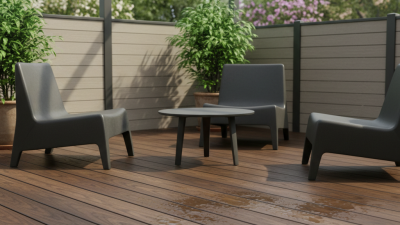
For a sunny deck or a dining area where spills happen, surface protection may matter most. For raised installations or projects where easier handling is useful, a lighter core may be worth considering. Still, lower weight does not automatically mean a board is suitable for every span. Follow the manufacturer’s spacing and support guidance, and inspect sample edges for signs of a thin or uneven cap. Small details can be easy to overlook. I would compare both features separately, then consider how the board will be installed and used.
| Comparison Dimension | Capped WPC Boards | Foam-Core WPC Boards |
|---|---|---|
| What defines the type? | A protective polymer-rich outer layer, commonly co-extruded around a WPC core, defines a capped board. | A cellular, foamed interior defines a foam-core board. The surface may be capped or uncapped. |
| Surface protection | The cap adds a barrier against everyday moisture, staining, and surface weathering. Its performance depends on the cap formulation and product construction. | Core foaming does not itself provide a protective surface layer. Surface protection depends on whether the board also has a cap or another finish. |
| Core density | Varies by construction: capped boards can have solid, hollow, or foamed cores. A cap alone does not determine core density. | Typically lower in density than a comparable non-foamed WPC core because the core contains cellular voids. Actual density varies by formulation and manufacturer. |
| Weight and handling | Weight depends mainly on the core design and board dimensions; capped products are not necessarily lightweight. | Often lighter than a comparable solid-core board, which can make carrying and installation easier. |
| Moisture considerations | The cap helps shield the surface, but cut ends, joints, and the board’s internal construction still matter. Follow the product’s installation guidance. | A foamed core is not automatically waterproof. Moisture performance depends on the material, surface finish, edges, and installation details. |
| Surface wear and care | The cap can improve resistance to common stains and surface wear, but it is not immune to scratching or damage. Cleaning instructions vary by product. | Surface wear resistance depends on the outer layer, not on the foam core alone. An uncapped surface may have different care needs from a capped one. |
| Cutting and fastening | Use the specified fasteners and installation method. Cutting may expose the core, so finished edges or suitable trim can be important. | Because the core is cellular, fastening and edge support should follow the product’s instructions; requirements can differ from solid-core boards. |
| Common selection priority | Consider this construction when an added surface barrier and easier routine cleaning are priorities. | Consider this construction when reduced board weight is a priority, while checking the surface finish and support requirements. |
| Key limitation | “Capped” describes the surface construction, not a guarantee of a particular core density or structural capacity. | “Foam-core” describes the core, not a guarantee of a capped surface, waterproof performance, or a specific load rating. |
Note: Capped and foam-core are not mutually exclusive categories: a WPC board can have both a protective cap and a foamed core. Confirm density, span limits, fastening details, and care instructions in the product’s technical documentation.