Shandong Xiangying New Materials Technology Co., Ltd.

 Hot Selling
Leave Your Message
Shandong Xiangying New Materials Technology Co., Ltd.
Outdoor spaces face sun, rain, muddy shoes, and the occasional dropped flowerpot. Choosing decking means weighing appearance against upkeep, weather exposure, and long-term performance. Wpc Decking Outdoor—wood-plastic composite decking used outside—offers a practical alternative to traditional timber. Its blend of wood fibers and polymers can resist moisture-related damage, but results vary with the product formulation, installation, and local climate. Composite is not maintenance-free.
The global wood-plastic composites market was valued at approximately USD 7.13 billion in 2023, according to Grand View Research, which projected continued growth through 2030. That figure covers multiple WPC applications, not decking alone. It signals wider commercial interest, not proof that every board suits every patio. Check the manufacturer’s technical data, warranty terms, and recommended joist spacing before comparing prices. A pale board may feel cooler underfoot than a dark one in direct summer sun. Small details matter.
One gap deserves honesty: no source material was supplied naming a WPC decking expert or documenting a quotation. I won’t invent one. A reliable expert comment should come from a named materials engineer, installer, or manufacturer technical specialist, with its original source checked before publication. That extra step may feel fussy. It protects readers. Then the real question becomes clearer: does WPC decking match your space, climate, budget, and willingness to clean it occasionally?
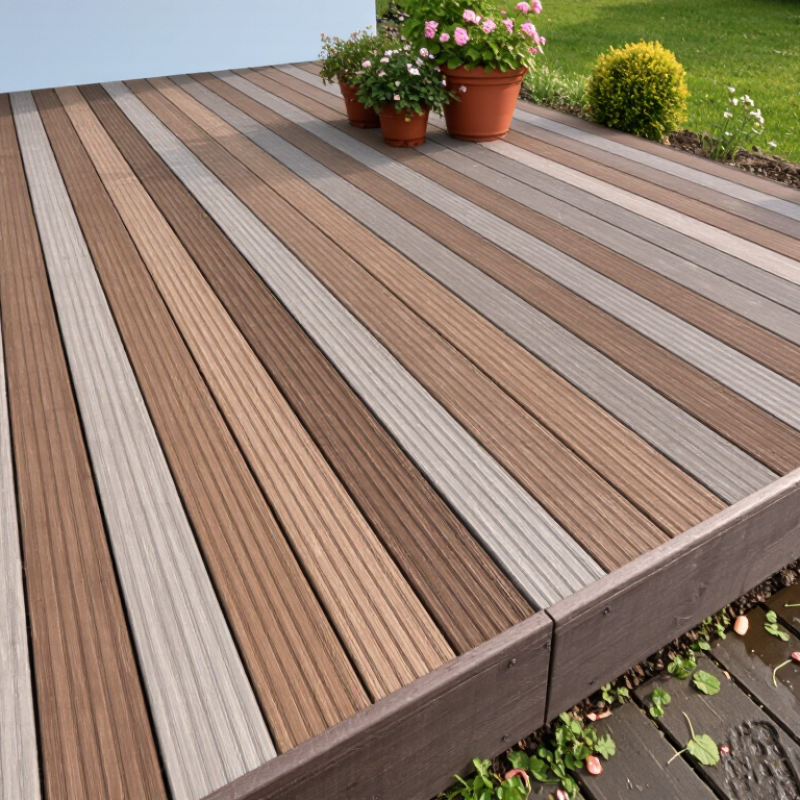
WPC decking means wood-plastic composite decking. It is made from wood fibers or fine wood flour blended with thermoplastic polymers. The wood provides a textured, natural-looking element, while the plastic binds the mixture and helps resist moisture. Some products also contain pigments and small amounts of additives to improve color stability or processing. Not solid timber.
Manufacturing usually begins by drying and measuring the ingredients. They are mixed, heated, and pushed through a shaped opening called a die, forming long deck boards. The boards are then cooled, cut to length, and may receive a brushed or embossed surface. Some are capped with a thin protective layer; others have an exposed composite surface. The details vary, so “WPC” does not describe one identical recipe.
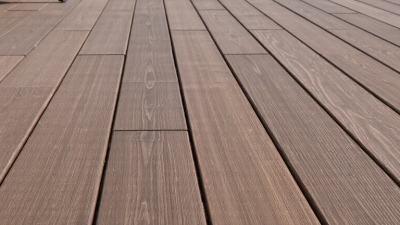
That variation matters outdoors. A board’s feel, color, weight, and resistance to fading can depend on its fiber content, polymer type, and production quality. A cut edge may reveal the composite core, while a smooth surface can feel different underfoot after rain. WPC can reduce routine staining and splintering compared with untreated wood, but it is not maintenance-free. Dust gathers in grooves. Dark boards may also become hot in strong sun, an easy detail to overlook when choosing a color.
| Dimension | What It Means | Why It Matters Outdoors |
|---|---|---|
| What WPC decking is | Wood-plastic composite (WPC) decking is a manufactured material made by combining wood-derived particles, such as wood flour or fibers, with a thermoplastic polymer and other formulation additives. | It combines a wood-like appearance with properties shaped by its polymer-and-wood composition. Products differ by formulation, profile, and surface treatment. |
| Common ingredients | Wood flour or fibers and thermoplastics such as polyethylene, polypropylene, or PVC are commonly used. Colorants, processing aids, and other additives may also be included. | The exact blend affects appearance, processing, and product performance. Check the product documentation for the specific material composition and care guidance. |
| How it is made | Ingredients are blended and heated, then commonly formed into decking profiles by extrusion. The profiles are cooled, cut to length, and may receive a textured finish or a protective outer layer. | Manufacturing creates consistent, repeatable board shapes and surface designs. Production methods and specifications vary among products. |
| Maintenance | Many WPC products do not require routine staining or sealing like some natural wood decks. Cleaning is generally done according to the maker’s instructions. | Potentially less periodic finishing can make upkeep simpler. WPC is not maintenance-free: dirt, spills, and debris still need attention, and cleaning requirements vary. |
| Moisture and decay | WPC’s polymer content can reduce water absorption compared with untreated wood, but it does not make every product waterproof or immune to moisture-related problems. | Appropriate drainage, ventilation, installation clearances, and regular cleaning remain important. Follow the product’s installation instructions, especially around standing water. |
| Splintering and surface feel | WPC boards are not natural lumber, so they do not develop wood splinters in the same way. Surface texture and feel depend on the product and its condition. | A smooth or textured composite surface may suit outdoor living areas, but inspect the surface and follow safety guidance for the chosen product. |
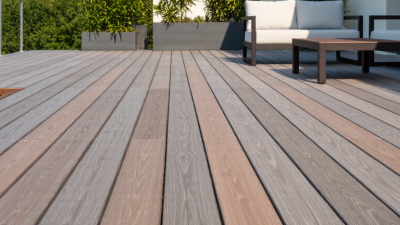
| Color and appearance | Color and grain-like patterns are created during manufacturing. Exposure to sunlight and weather can change a deck’s appearance over time; the amount varies by product. | Review product information about color change and care, and consider ordering samples to assess the finish in the intended outdoor setting. |
| Heat and sunlight | Like many outdoor decking materials, WPC can become hot in direct sun. Surface temperature depends on factors such as color, sunlight, and weather. | For sunny locations, consider shade, lighter color options, and the manufacturer’s guidance on surface temperature and intended use. |
| Installation and movement | Composite boards can expand and contract with temperature changes. Fixing methods, spacing, framing requirements, and allowable spans are product-specific. | Correct installation helps accommodate movement and supports drainage. Use the board maker’s instructions rather than assuming standard wood-deck details apply. |
| Choosing a product | Compare the stated material, board profile, surface treatment, warranty terms, care instructions, and installation requirements. | Matching the product to the climate, exposure, traffic, and maintenance preferences helps set realistic expectations for an outdoor deck. |
Note: WPC formulations and performance vary. Always consult the specific product’s technical data, warranty, care instructions, and installation guide.